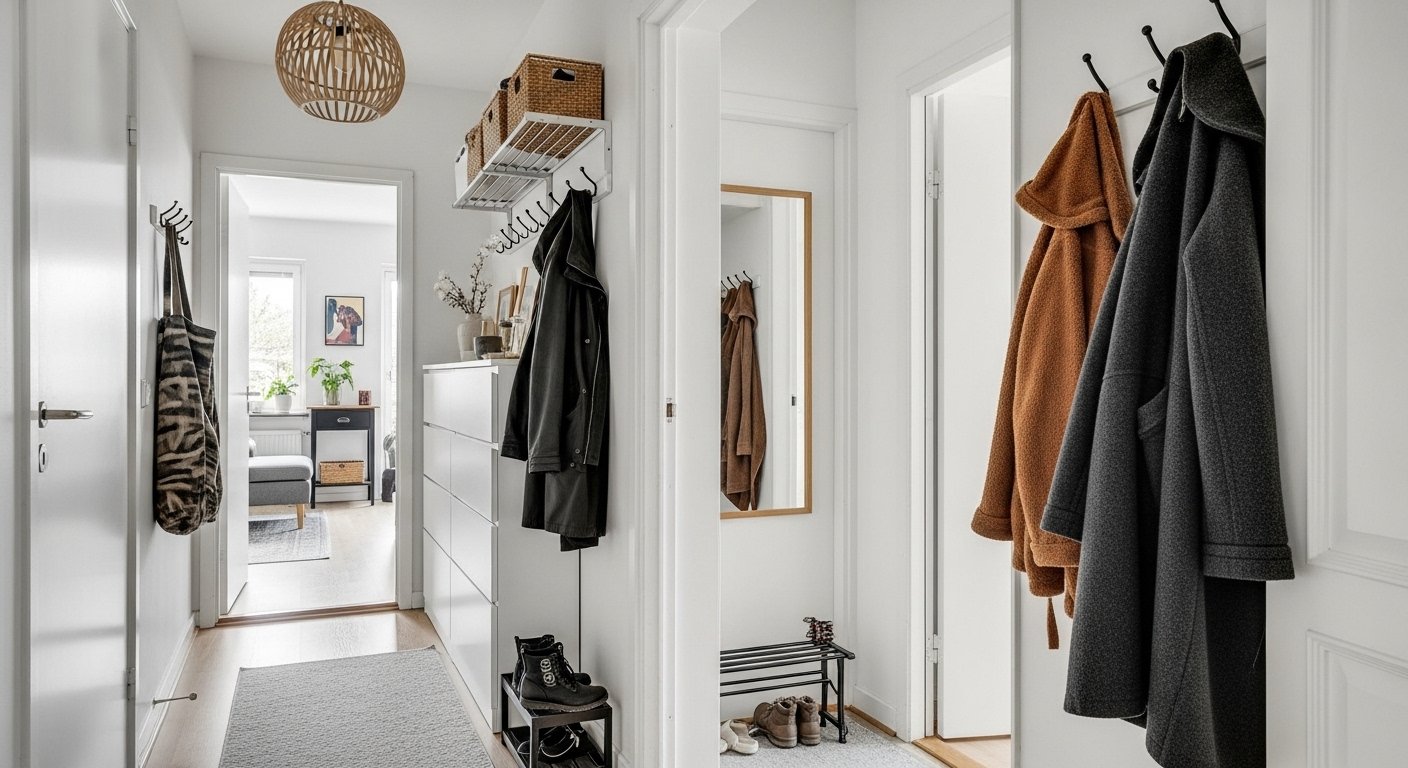
I always trip over the same pile of shoes by the door.
The narrow hall looks like an afterthought. I can't stand an empty wall.
I want it to feel useful and intentional, not cluttered or staged.
Small changes—placement, texture, scale—fix it. I'll show you how I make a small hallway work and look calm.
How To Organize A Small Hallway For Maximum Function And Style
This will show you how to make a tight hallway feel useful and calm. I focus on the look you end up with: a clear path, a neat landing for keys, and a balanced visual flow. It’s achievable in an afternoon with a few simple pieces and choices.
What This Solves
It stops shoes, coats, and mail from taking over the first few feet of your home.
It turns wasted wall space into a useful pause between rooms.
You get a warmer first impression and a real place to drop what you carry in. That one change makes the whole house feel steadier.
What You’ll Need
- Slim 36" walnut console table, narrow depth (solid wood look)
- 2.5'x8' neutral wool runner rug, low pile
- 24"x36" vertical wall mirror, black metal frame
- 4-hook matte black coat rail, slim profile
- Medium woven seagrass basket (shoe storage)
- Small white ceramic catchall tray for keys
- 24" white floating shelf (display and mail drop)
Step 1: Anchor the path with a runner rug
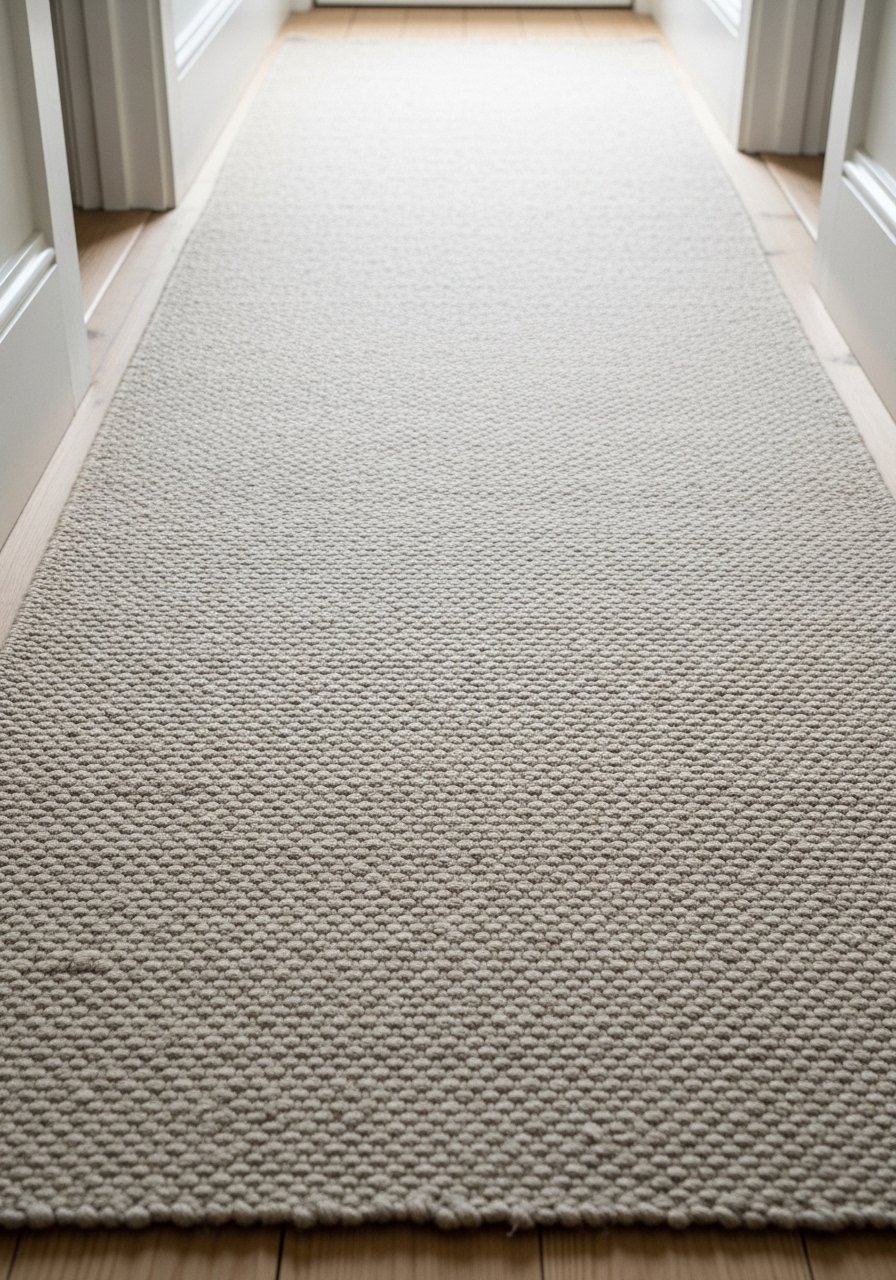
I start by placing a runner to define the walkway. The rug creates an immediate path so your eye travels down the hall. That single change makes the space feel intentional instead of random.
Visually, the rug tucks the floor together and hides scuffed areas. People often miss scale here: a runner that’s too narrow looks lost. The mistake to avoid is pushing it against the baseboards; leave a little floor edge so the rug reads as deliberate, not pasted on.
Step 2: Add a slim console to create a landing
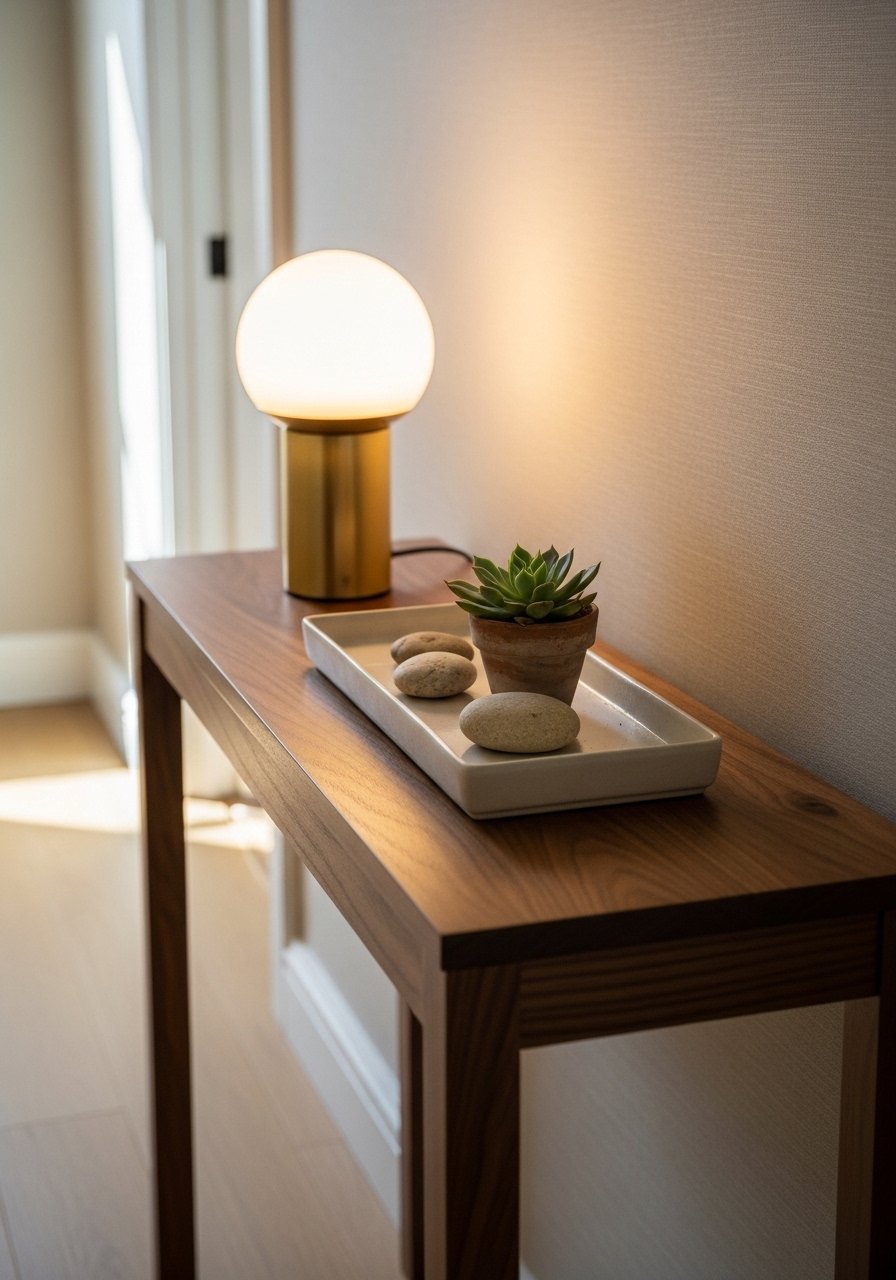
I put a narrow console along the longest wall to create a landing. It gives a place to set keys and mail without crowding the entry. A slim table keeps the walkway open and reads calm.
The visual change is immediate: the wall stops feeling wasted. Most people underestimate depth. Don’t choose a deep table that blocks movement. Also avoid too much clutter on top—one tray, one small lamp or plant keeps it purposeful, not piled.
Step 3: Hang a vertical mirror to add light and depth
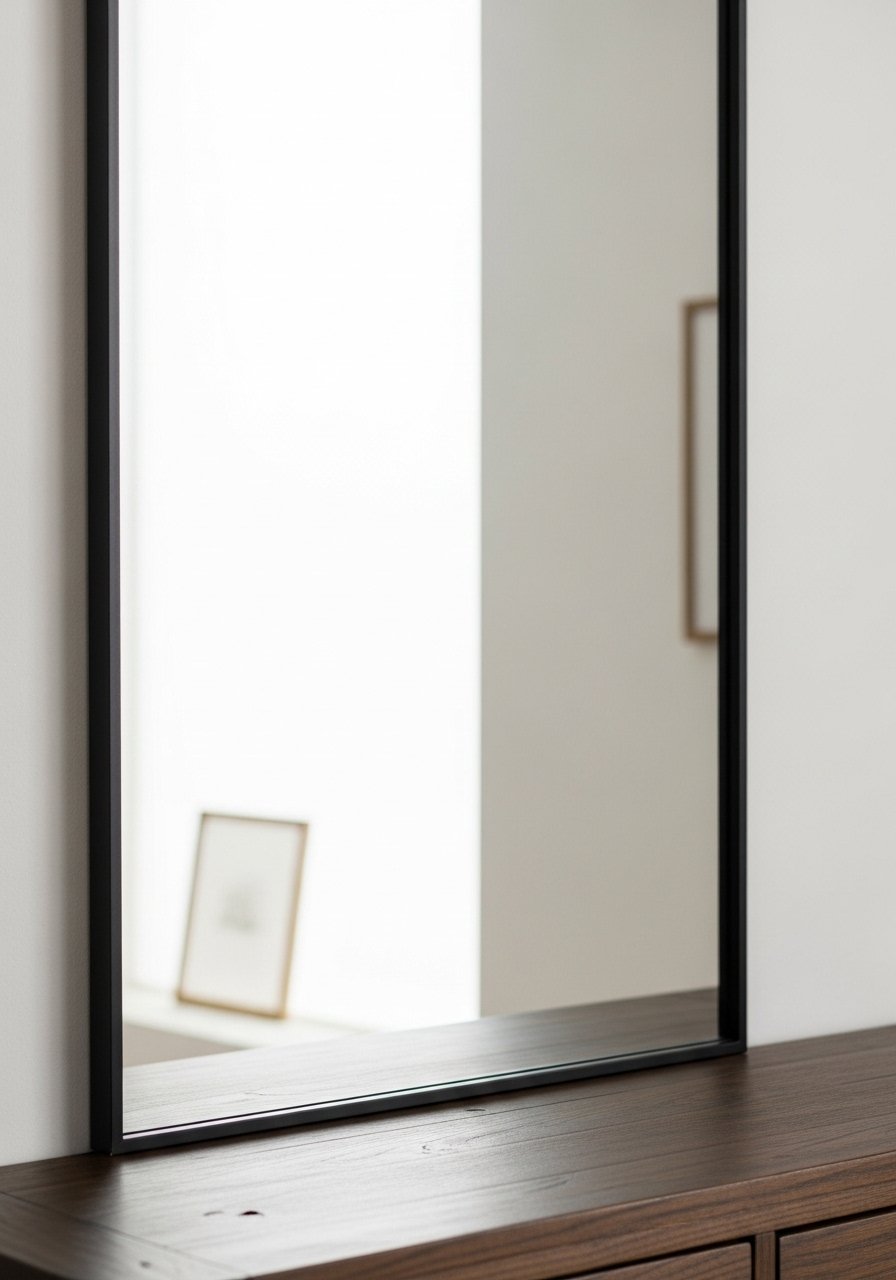
I hang a vertical mirror above the console to bounce light and make the hall feel taller. The mirror turns a narrow space into something visually larger and friendlier.
You’ll notice more light and a taller feel right away. A common miss is placing the mirror too high—set it so the average person can see themselves. Avoid decorative frames that overpower the space; keep the frame slim so the mirror reads as an extension of the wall.
Step 4: Install practical hooks and a shelf for grab-and-go
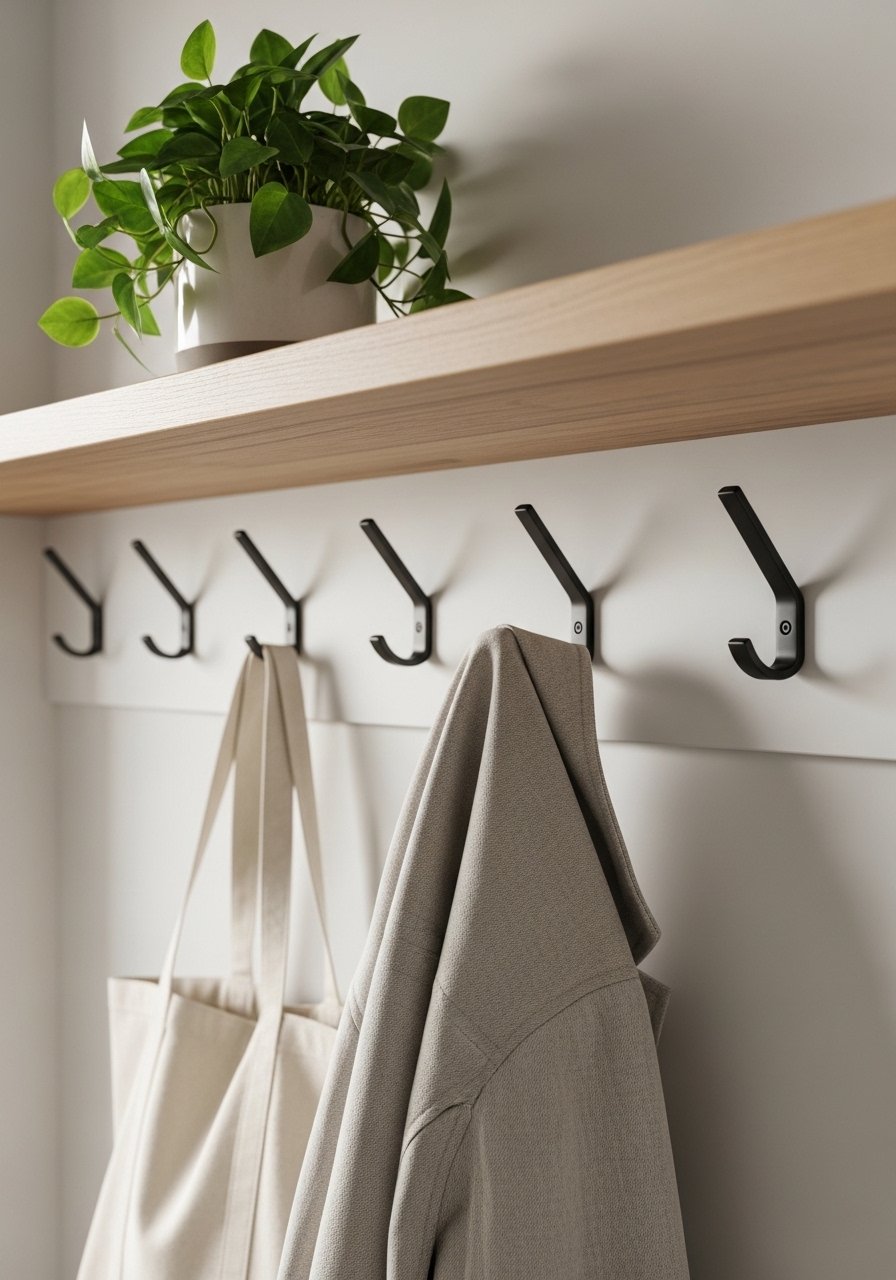
I add a rail of hooks at shoulder height and a floating shelf above. Hooks keep daily coats and bags off the floor. The shelf gives a spot for a small plant or an outgoing-mail pile.
The hall suddenly feels organized and used. Many people forget to balance height: hooks too low or shelf too deep feels clumsy. Avoid overloading the hooks; keep three to five items maximum so it reads neat instead of chaotic.
Step 5: Tame the base with baskets and a catchall
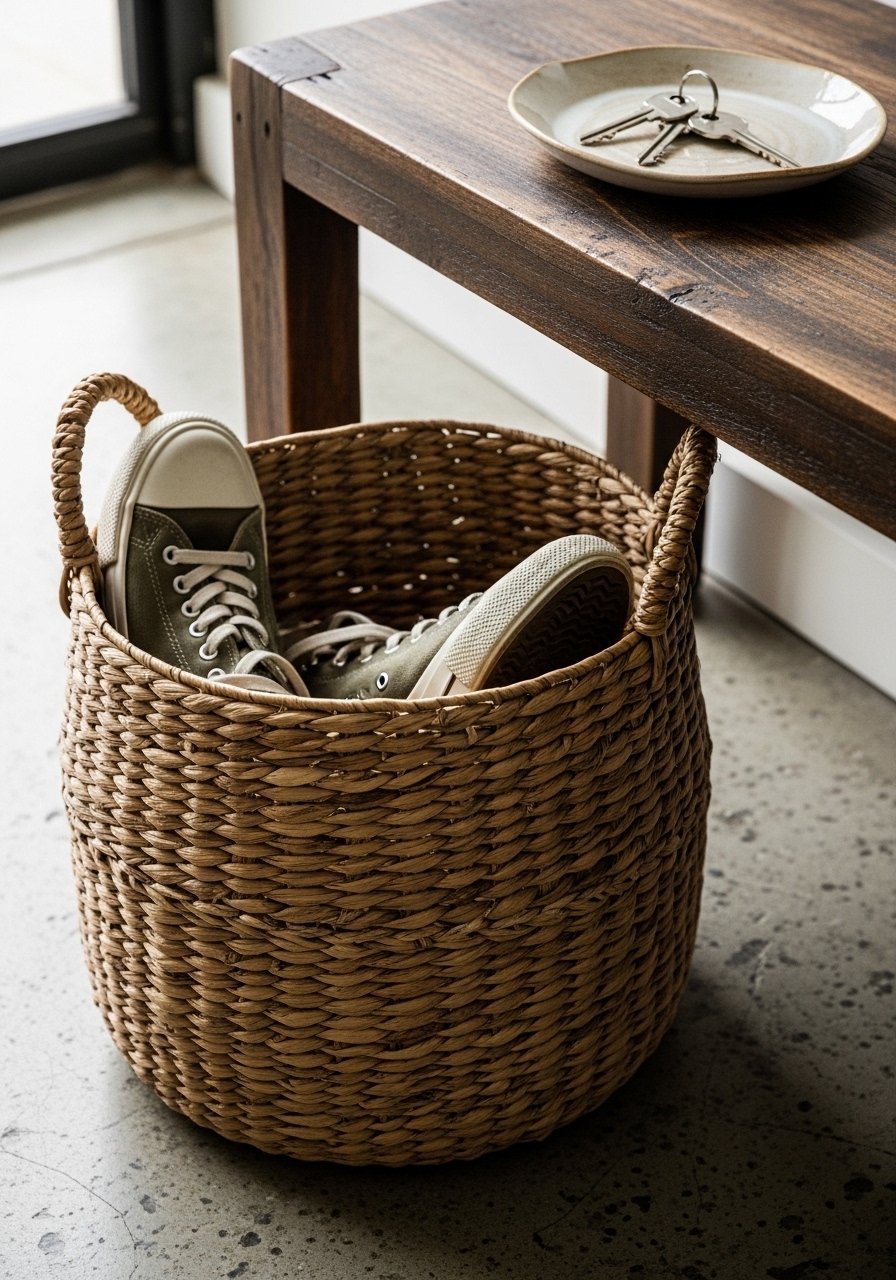
I tuck a woven basket under the console for shoes and use a small ceramic tray for keys and change. The basket hides clutter and the tray keeps small items from spreading out.
Visually, the floor looks cleaner and the console top feels purposeful. People often skip the basket and end up with shoes scattered. Don’t pick a basket too small; it should swallow at least several pairs. And avoid piling items on the console—keep the tray as the only regular catch-all.
Quick Styling Fixes
I use a small lamp or slim wall sconce if the hall feels dim. A low, warm light makes it welcoming in the evening.
A single small artwork or a stack of tidy frames helps the eye move without clutter.
Bullets I rely on:
- One plant for texture (real or faux).
- A folded throw on the console for softness.
- Rotate the runner if one end wears faster.
Lighting and Scale
I check scale by standing in the center and looking; if something blocks the sightline it’s too big. Lamps should be proportionate to the console—small but visible.
If your hall has low ceilings, vertical mirrors and narrow furniture keep things feeling taller without making them look cramped.
Daily Habits to Keep It Working
I put shoes in the basket each evening and hang coats as I come in. These small habits keep the intentional look.
Once a week I clear the console surface and deal with mail. It takes minutes but keeps the hall calm and useful.
Final Thoughts
Start with one change—usually the rug or a console—and live with it for a week.
Small adjustments teach you what the space needs. You’ll get confidence fast.
A tidy, purposeful hallway doesn’t require perfect styling. It just needs consistent choices that make coming and going easier.
Leave a Reply