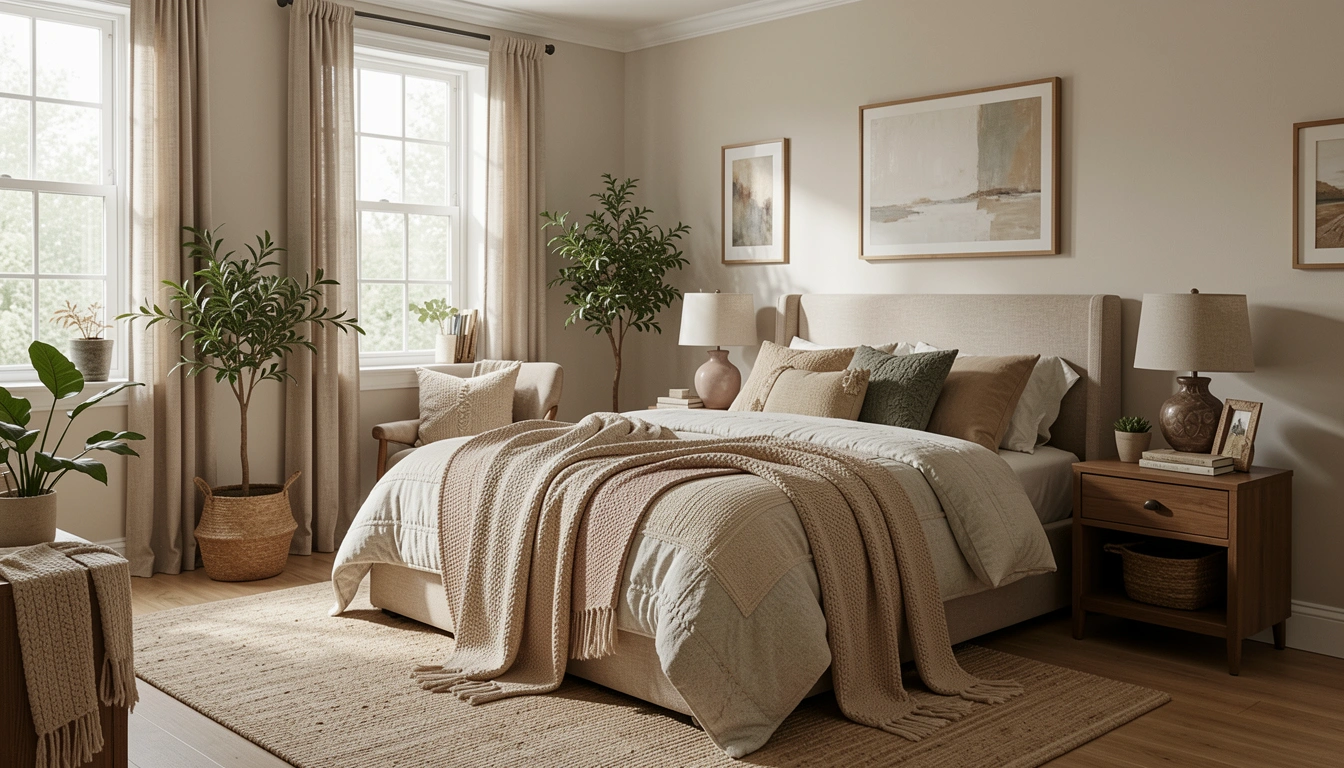
My master bedroom always felt off. The bed took over the space. Walls stayed bare. Nightstands looked lonely.
I stood there one morning, coffee in hand, wondering why it never felt comfortable. Like it was waiting for me to live in it.
Then I shifted a few things. Now it pulls me in at the end of the day.
How To Style Master Bedroom Decor
This shows you how I make a master bedroom feel balanced and lived-in. We focus on placement and layers that settle right. You'll end up with a room that's warm and intentional, without starting over.
What You’ll Need
- Soft linen duvet cover in neutral beige, queen size
- Woven cotton throw blanket in warm gray
- Matte ceramic bedside lamp, 24 inches tall
- Jute area rug, 8×10 feet
- Wooden picture ledge shelf, 36 inches wide
- Set of three linen euro shams in soft white
- Brass table lamp base with fabric shade
- Faux sheepskin rug accent, 2×3 feet
Step 1: Anchor the Bed in the Center of Attention
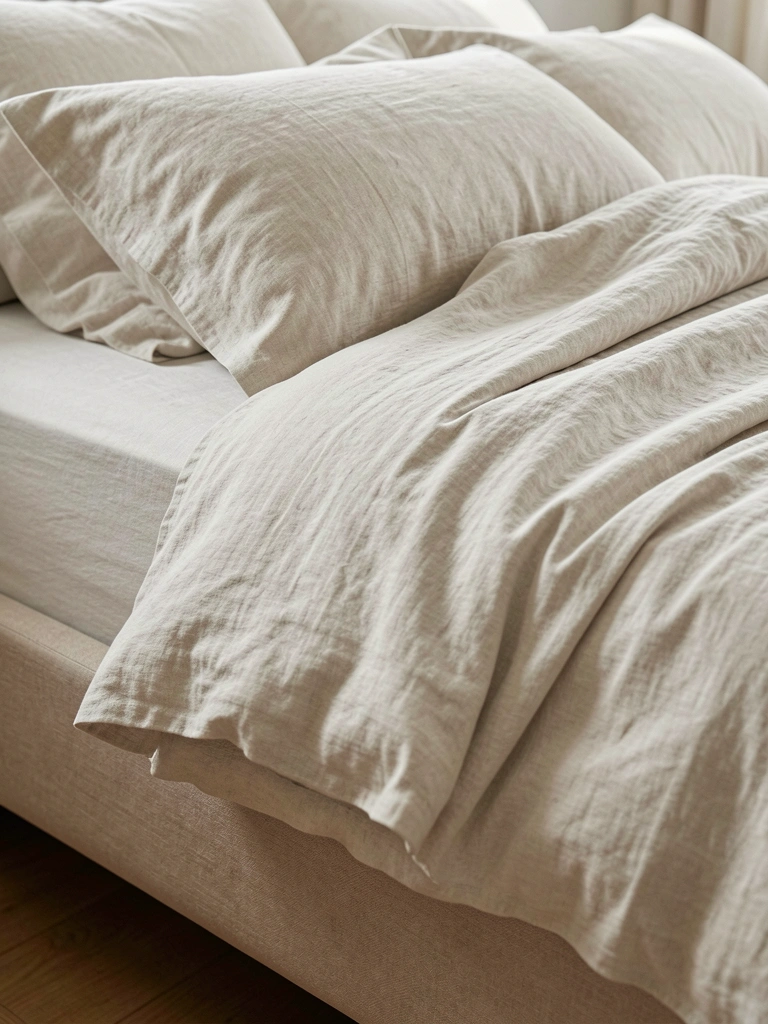
I start with the bed because it's the room's heart. I pull it away from the wall by six inches. This lets air move around it.
Visually, the room opens up. Shadows play softer. It feels less cramped.
People miss how centering the bed shifts your eyes naturally. Avoid pushing it flush against the wall—that traps the space.
Now walk in. Notice the pull toward rest.
Step 2: Balance the Nightstands with Purpose

Next, I match nightstands at the same height. One lamp, one simple stack. Nothing fussy.
The sides even out. Your gaze rests easy across the bed.
Most overlook height matching—it makes the bed look wider. Don't overload with stuff; empty space breathes.
I step back. The bed sits steady now.
Step 3: Layer the Bed for Warmth and Depth

I layer duvet, shams, then throw at an angle. Fold the duvet halfway down.
Texture builds. Light catches each layer differently. It invites touch.
Folks forget the angle on throws—it softens hard lines. Skip matching everything perfectly; slight off feels real.
Sit on the edge. Feels cozy already.
Step 4: Ground the Floor with a Rug
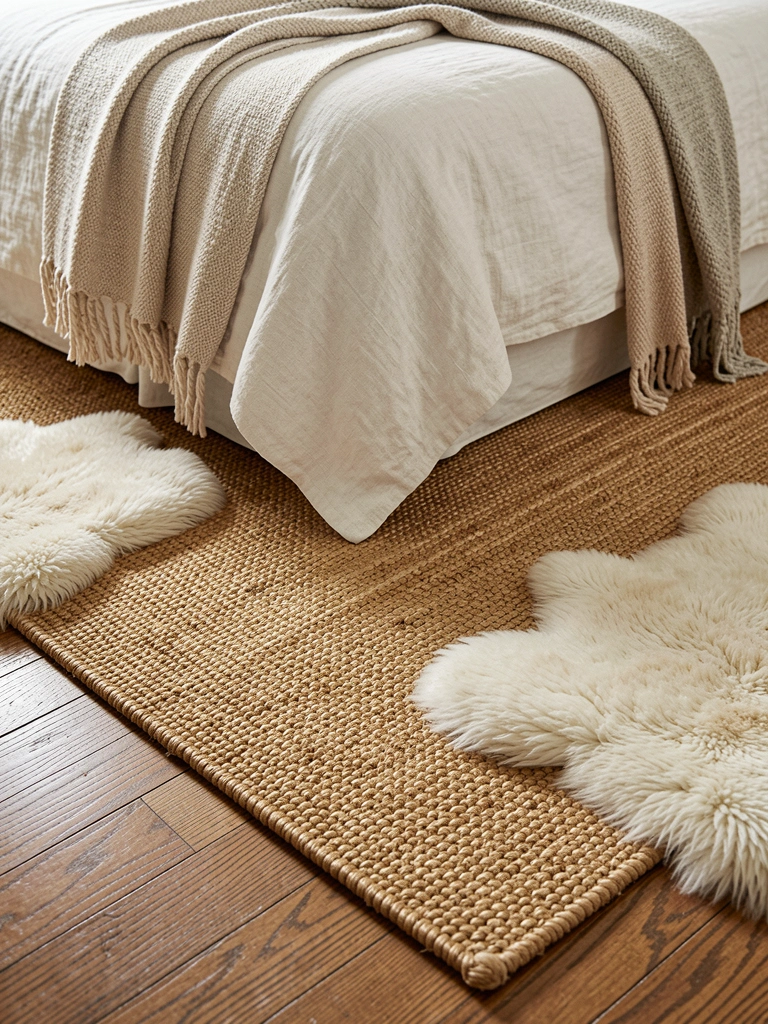
I roll out the rug under the bed, leaving four inches of floor showing. Add a sheepskin by the bed.
The floor connects. Feet sink in softly. Room feels rooted.
The insight? Rug size matters—too small floats. Avoid centering it dead under; offset pulls you in.
Stand at the door. Flow feels right.
Step 5: Add Wall Layers Above the Bed
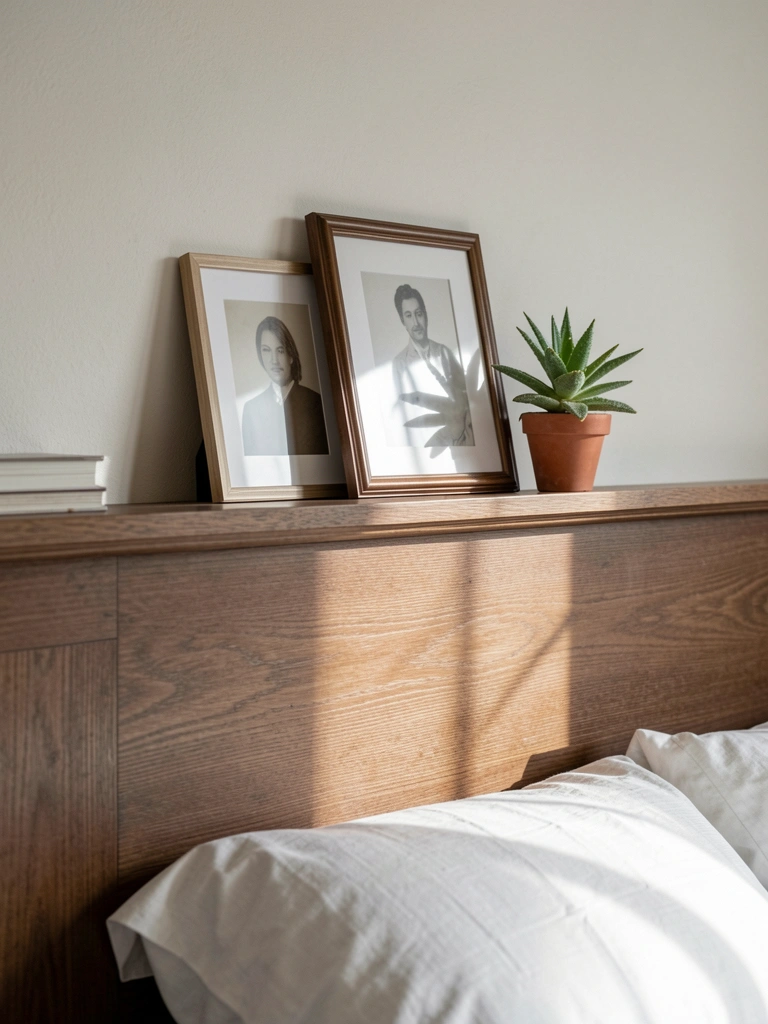
I hang a ledge shelf above the bed, centered. Lean two frames, add one plant.
Walls gain depth without crowding. Eyes lift gently.
People miss leaning over hanging—it adds casual weight. Don't cluster too tight; space lets light through.
Lie back. Ceiling opens up.
Step 6: Soften Edges with Lighting
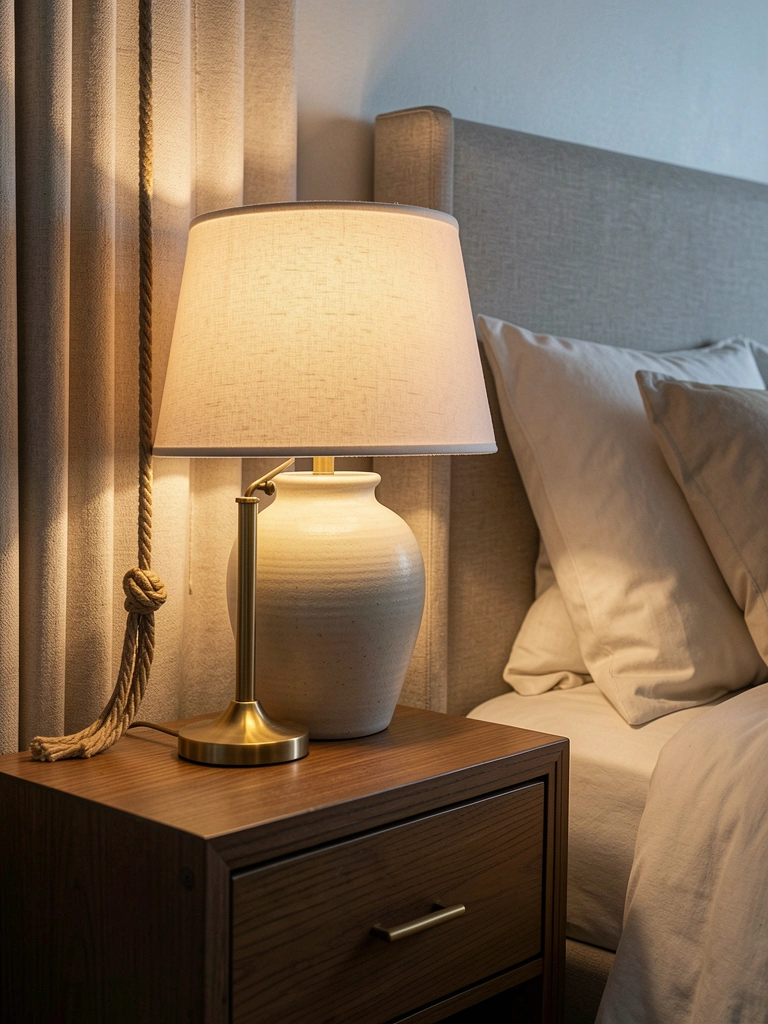
Finally, lamps on nightstands at eye level when sitting. One warm glow each side.
Light pools balanced. Night feels safe, not stark.
Overhead lights kill intimacy—missed every time. Avoid tall shades that glare down.
Turn them on at dusk. Room wraps around you.
Layering Textures Without Overdoing It
I keep textures varied but quiet. Linen on the bed, jute below, wood on shelves.
This builds subtle interest. Light plays across them naturally.
- Start with base fabrics like cotton or linen.
- Add one nubby piece, like a throw.
- Wood or ceramic grounds it.
Too many patterns fight. I pull back to what touches soft.
Choosing Colors That Last
Neutrals hold up year-round in my bedroom. Beige duvet, gray throw, warm woods.
They shift with seasons naturally. No big swaps.
- Stick to earth tones for walls and large pieces.
- One deeper shade for accent.
- White linens keep it clean.
Brights fade fast. I learned that the hard way.
Personal Touches That Stick
Books I read, a frame from travel. They make it mine.
Placed where eyes land first—nightstand, ledge.
- One or two per surface.
- Rotate if bored.
- Keep scale small.
Stuff without meaning collects dust. Now it feels like home.
Final Thoughts
Start with the bed if you're short on time. One change snowballs.
You've got this—rooms respond to simple shifts.
Stand in yours tomorrow. It'll feel more like you.
Leave a Reply