I used to ignore my hallway until I realized it sets the tone for the whole home. Fixing it didn’t take a full remodel — just choices that actually live well.
I’ll show the small swaps I kept, the things I returned, and what finally felt right. Honest, easy, and budget-friendly.
You’ll get 25 real ideas you can try this weekend, with what to buy and what to skip.
25 Stunning Small Hallway Decor Ideas To Transform Your Space
These 25 ideas are practical and lived-in — not showroom fluff. Each entry has a short personal note, a clear tip, and linked items so you know what to buy. These are things I’ve done in narrow spaces, tight budgets, and older homes.
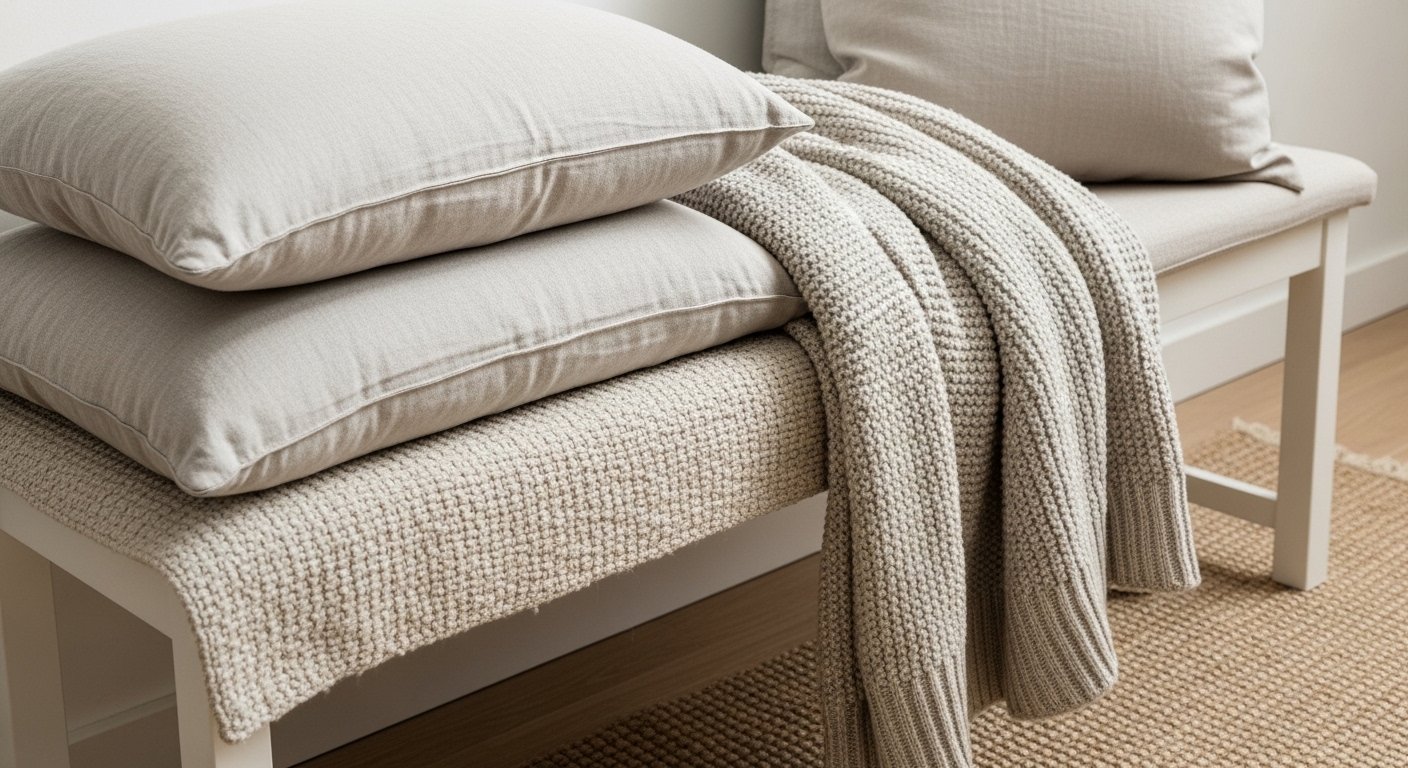
1. Layered Neutral Textiles That Make a Room Feel Finished
I added a linen bench cushion and a chunky throw to our hallway bench and it finally felt like a space, not a transit zone. The layers softened echoes and hid scuffs.
I once bought bright patterns that fought with the light. Neutral layers let the wood and plants breathe.
Look for mixed textures — linen, chunky knit, small cotton rug — to keep it interesting without clutter.
What I learned: keep one patterned piece and the rest calm. It reads intentional, not busy.
What You’ll Need for This Look
2. Slim Console Table With a Shallow Drawer for Mail
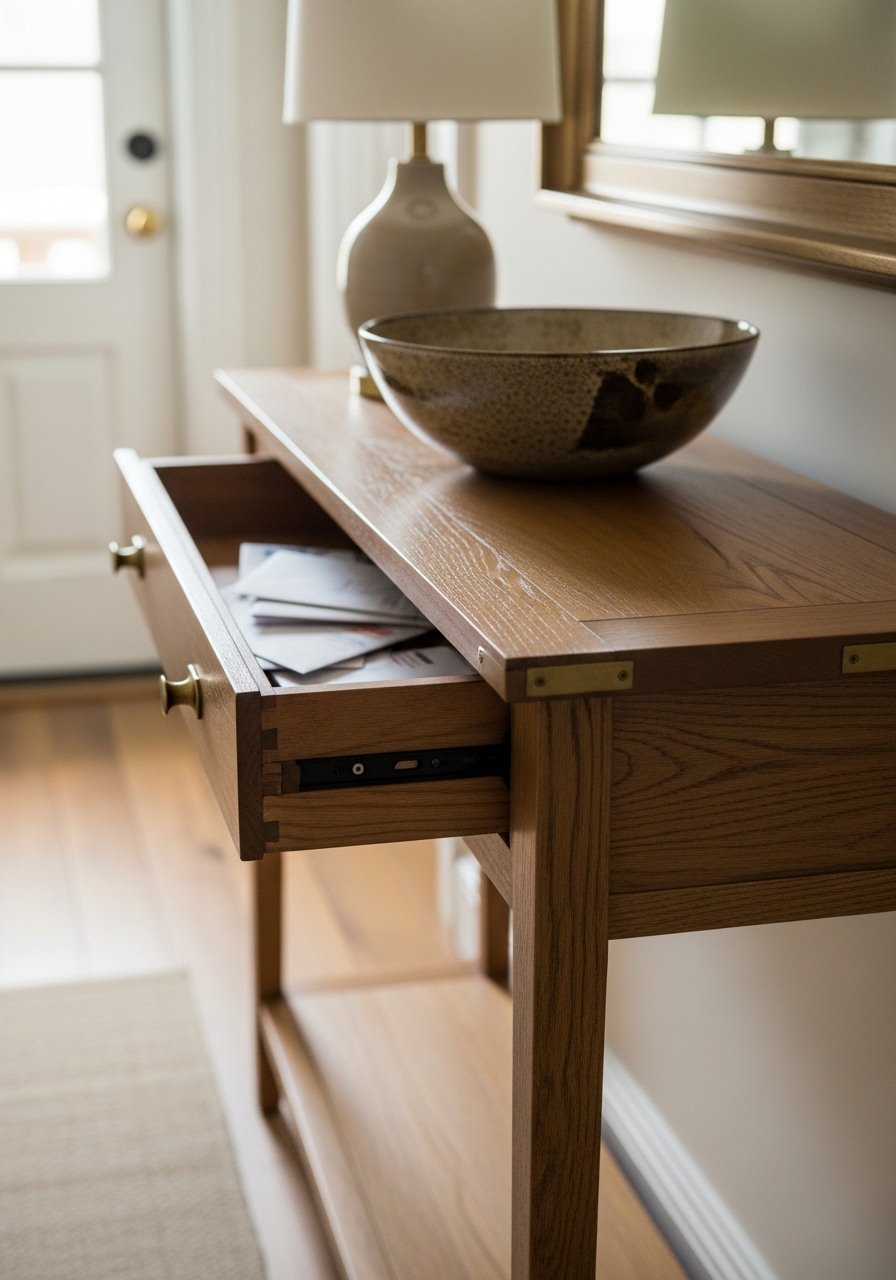
I swapped a bulky hall table for a 10–12" deep console with one drawer. It still looks like furniture but fits in tight walkways.
I initially bought one with ugly hardware; returned it. The right scale and a single drawer for mail made the place calmer.
Use the tabletop for a lamp and a catch-all tray. Keep the drawer for things you need but don’t want visible.
Tip: measure twice. Even an inch or two makes a difference when people brush past.
What You’ll Need for This Look
- Slim console table (12" deep, light oak)
- Matte ceramic table lamp, off-white
- Light wood decorative tray (8×10)
3. Gallery Wall with Mixed Frames and One Focal Piece
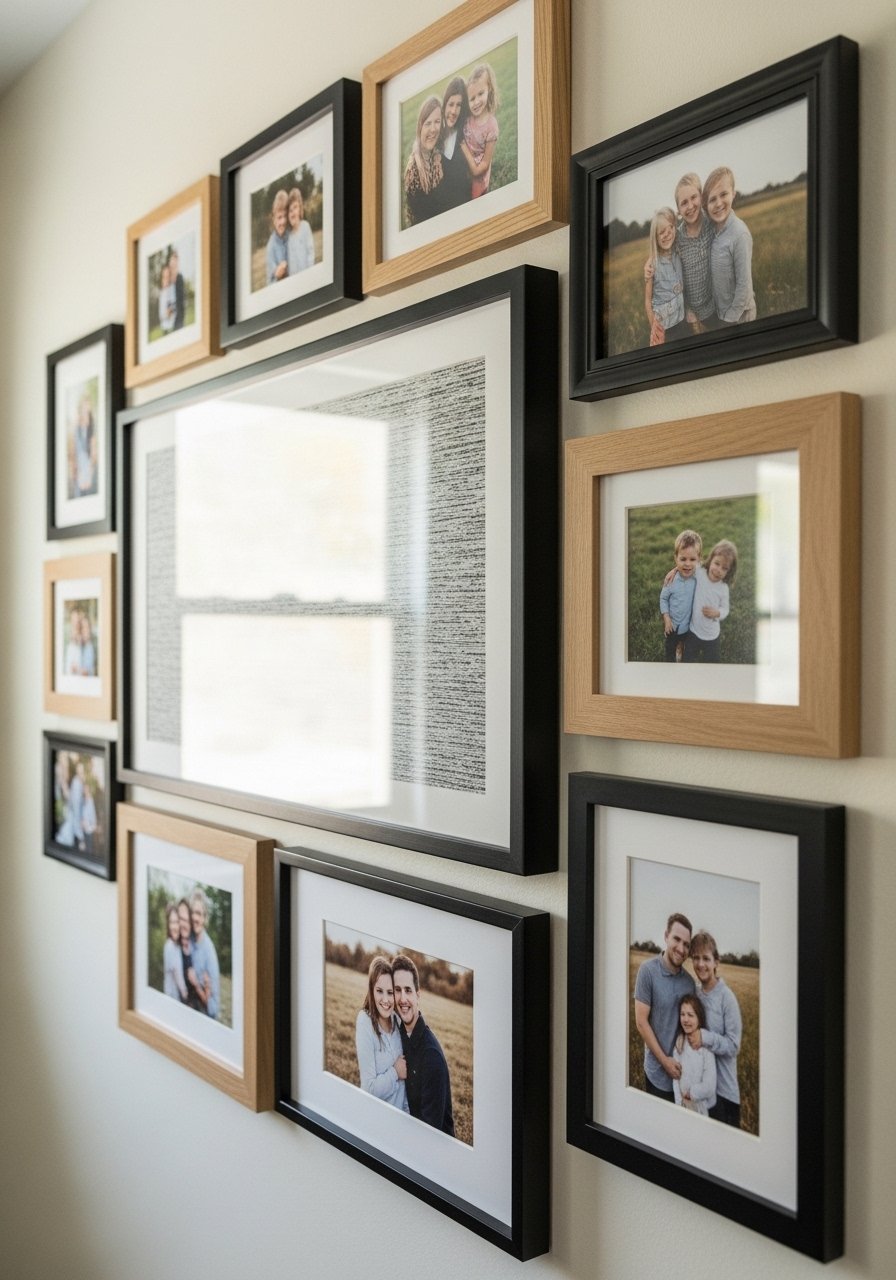
I created a gallery with a single large print as the anchor. The smaller frames around it made the wall read curated, not chaotic.
My early attempt had mismatched mats and it looked messy. Replacing a few frames and unifying the color fixed it.
Map the layout on the floor first. Use consistent frame finishes or a unifying color in the artwork to tie it together.
Small touch: swap one photo seasonally to keep the wall feeling fresh.
What You’ll Need for This Look
4. Runner Rug to Define Path and Add Warmth
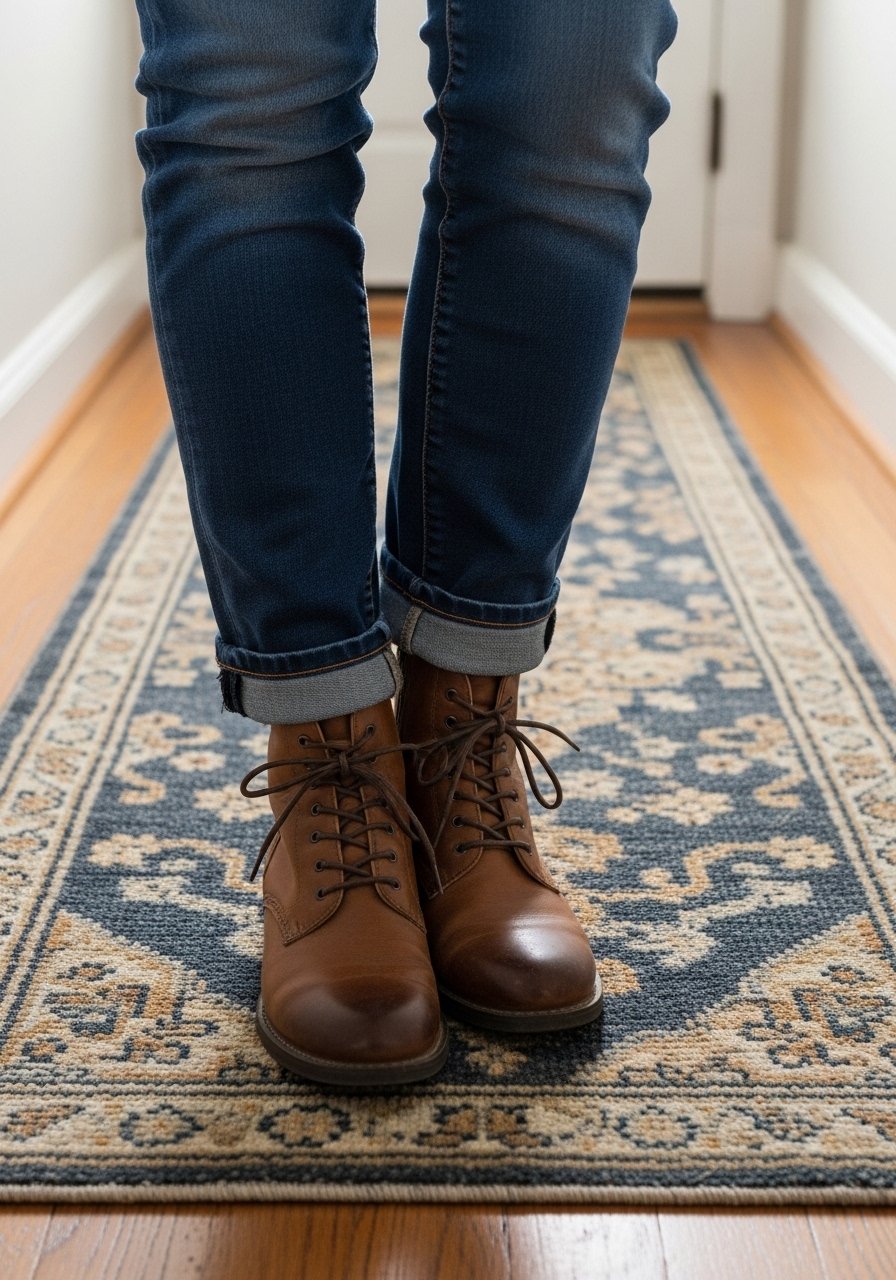
A runner shifted the whole feel of our hallway from cold to cozy. It also cut down on footstep noise and scuffs on old wood floors.
I bought one too thin the first time. It slid and looked sloppy. A non-slip pad and slightly thicker rug fixed that.
Choose a length that leaves a 2–3" border of floor on each side. Low pile works best for doors and vacuuming.
If you’re unsure about pattern, pick muted colors that hide traffic wear.
What You’ll Need for This Look
5. Statement Mirror to Bounce Light and Widen Space
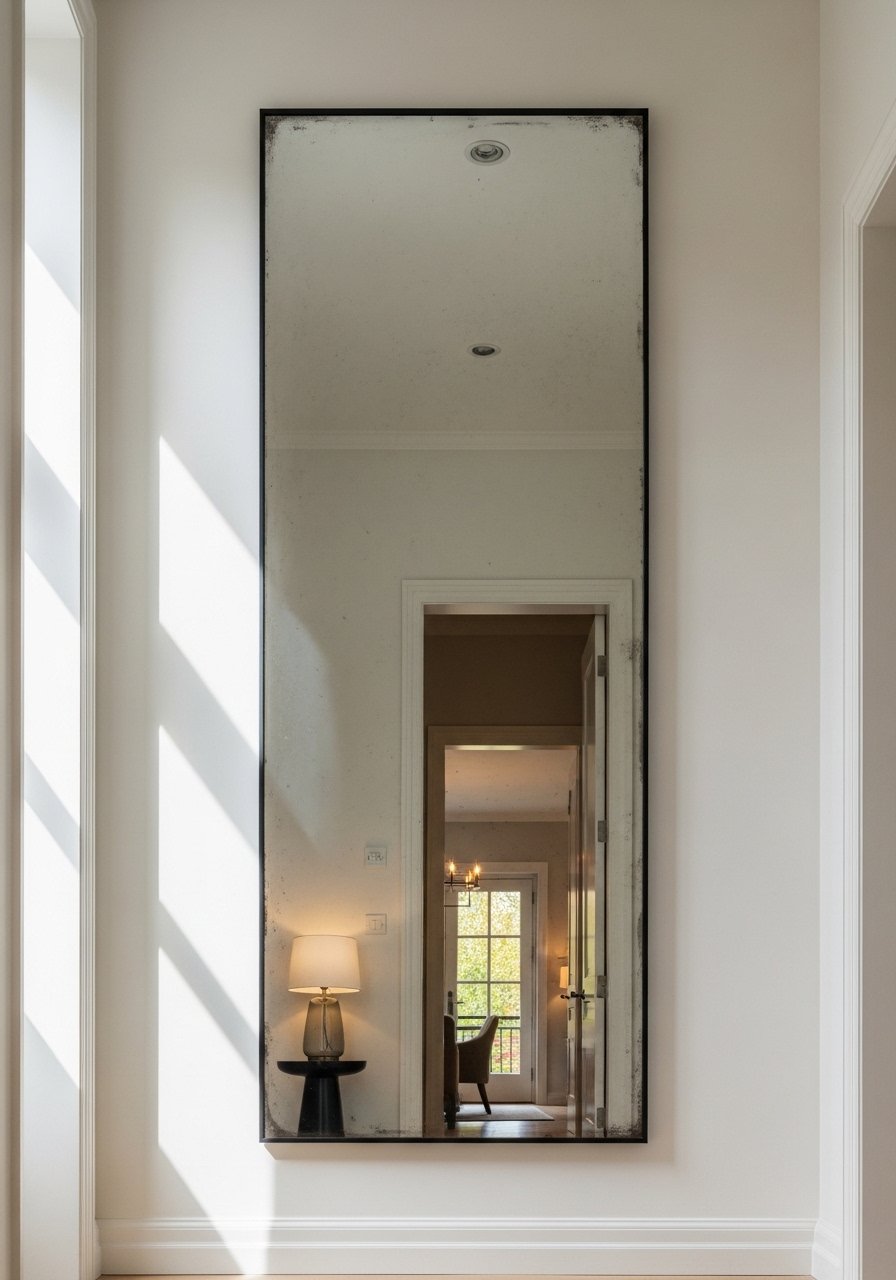
A tall mirror changed the hallway’s proportions overnight. It doubled the light and made the space feel intentional instead of tight.
I once hung a mirror too high; it reflected the ceiling and felt odd. Lowering it so eye level hits the center fixed that.
Lean a framed mirror on a narrow console if hanging isn’t allowed. Mirrors also hide small flaws when placed thoughtfully.
Tip: match the mirror frame to other metals in the space for cohesion.
What You’ll Need for This Look
- Large hallway mirror (24×48, black metal)
- Mirror hanging hardware
- Anti-tip straps for leaning mirrors
6. Wall-Mounted Floating Shelves Stacked for Plants and Books
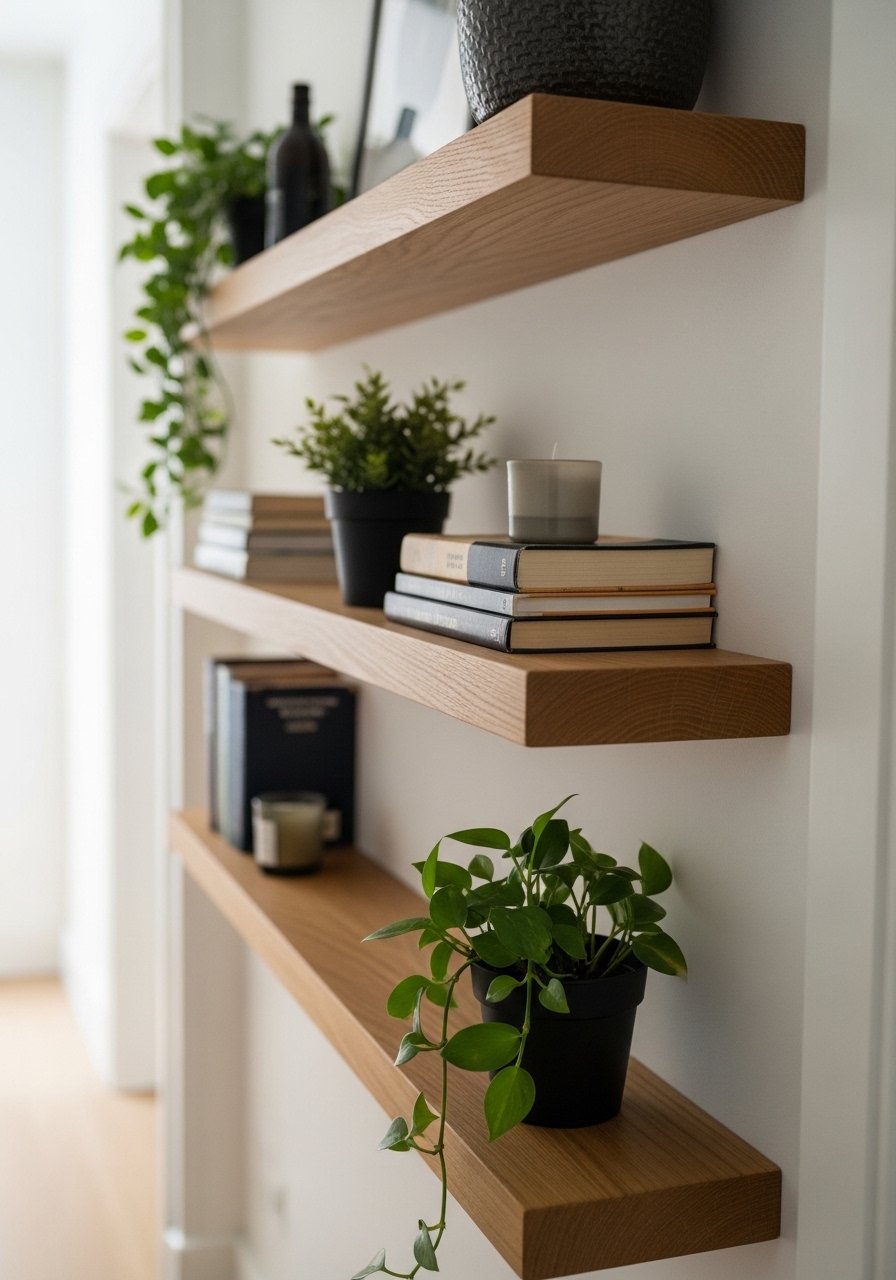
Floating shelves are my go-to for narrow walls. They give you display space without the bulk of furniture.
I once overloaded the shelves and they sagged. Spreading weight and using solid brackets solved that issue.
Use shallow shelves (8–10") and alternate plants with small stacks of books. Keep lower shelves clear of things that block the walking path.
If you rent, removable wall anchors work well and won’t destroy drywall.
What You’ll Need for This Look
7. Built-In Bench With Hidden Storage
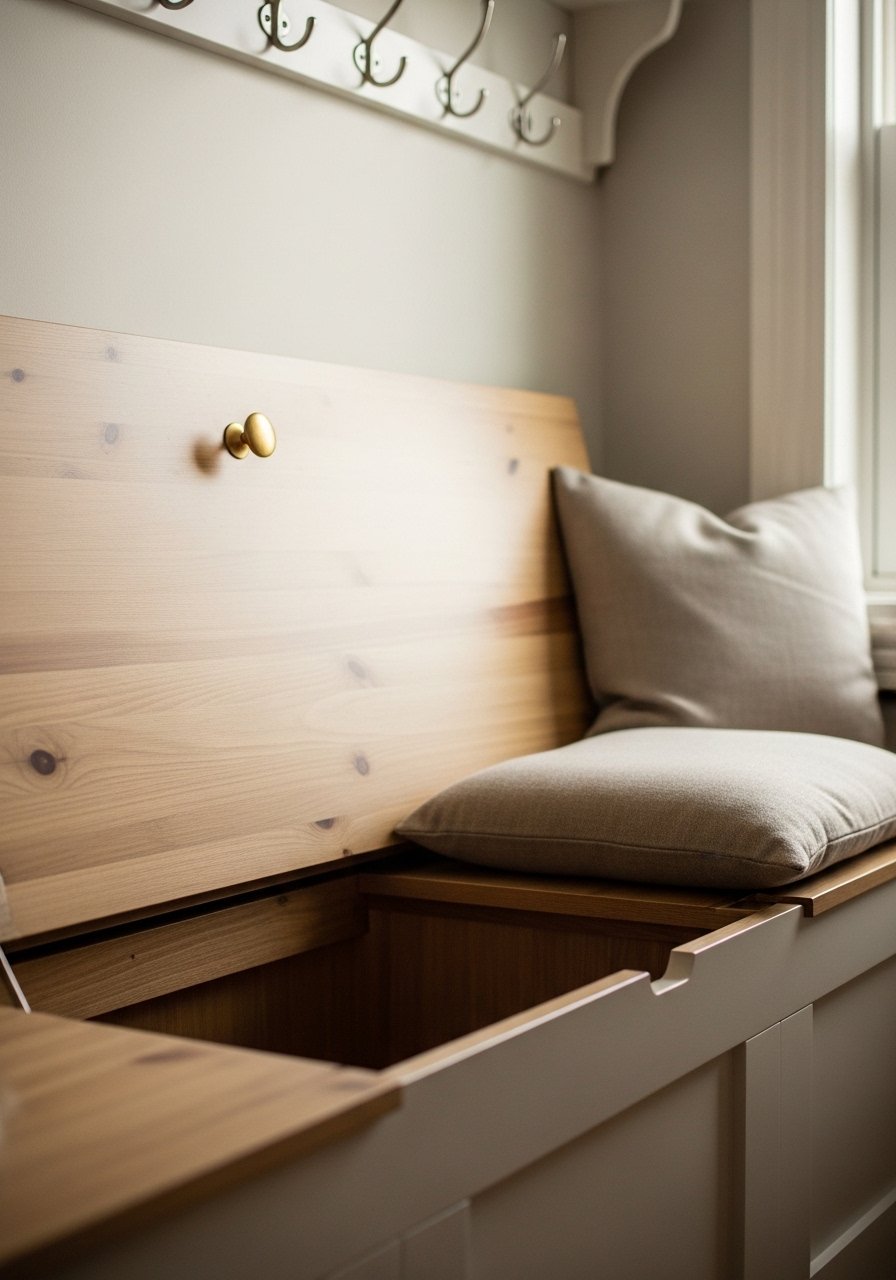
We built a shallow bench under existing hooks and gained so much hidden storage for shoes and kids’ backpacks.
I underestimated the lid hinges at first; swapped to soft-close and it felt solid and grown-up.
Keep the bench depth shallow so doors still open and people can pass comfortably. A cushion makes it somewhere you want to sit, not just drop stuff.
If you can’t build, a storage bench with similar proportions will work well.
What You’ll Need for This Look
8. Vertical Coat Rack With Hooks and a Small Shelf
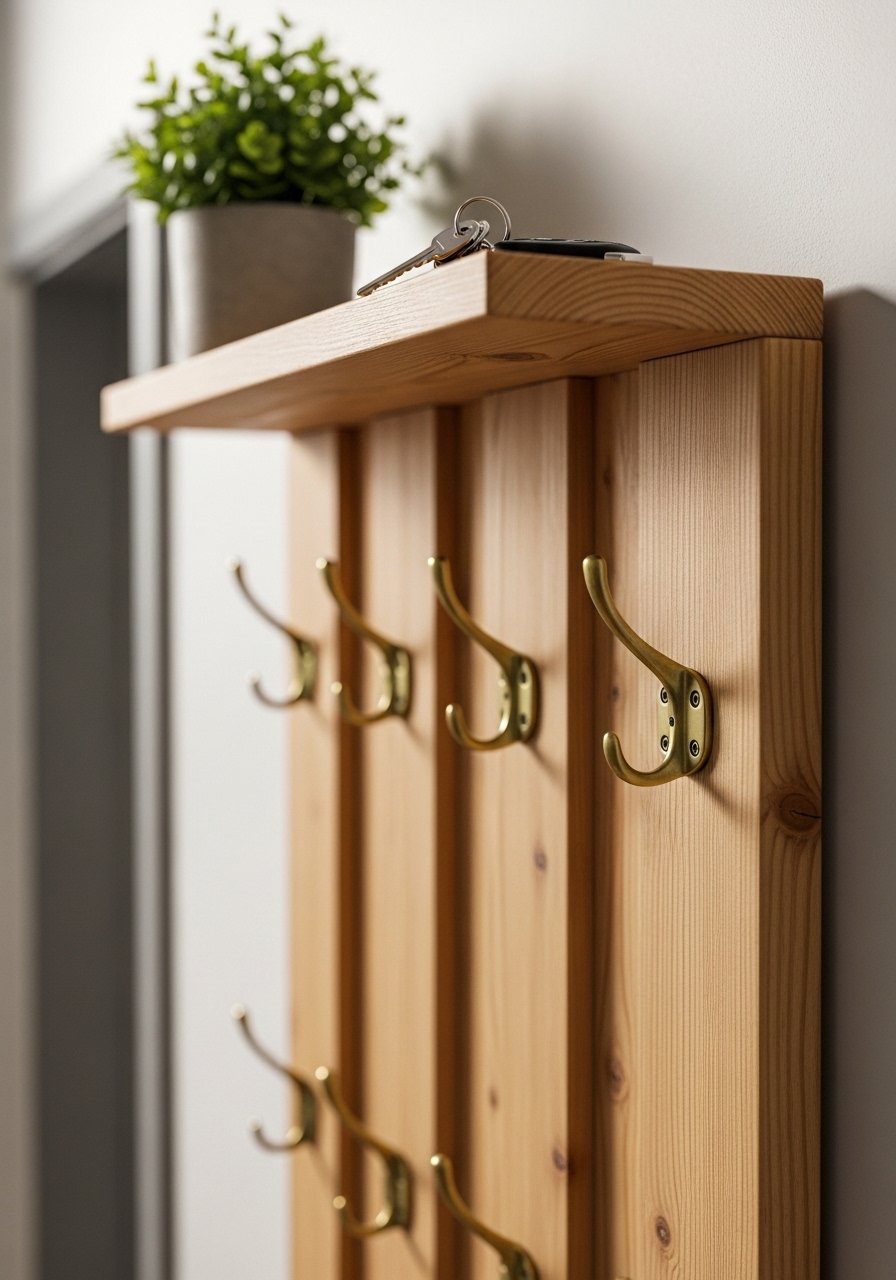
A vertical rack kept coats off the floor and saved space compared to a bulky hall tree. The top shelf holds sunglasses and a plant.
My first hooks were too flimsy and bent under bags. I swapped to solid brass hooks and they lasted.
Install hooks at two heights for kids and adults. Keep the lower hooks clear for everyday use and the upper shelf for seasonal items.
A slim vertical piece can act like wall art and function at once.
What You’ll Need for This Look
9. Accent Wall in Soft Matte Paint
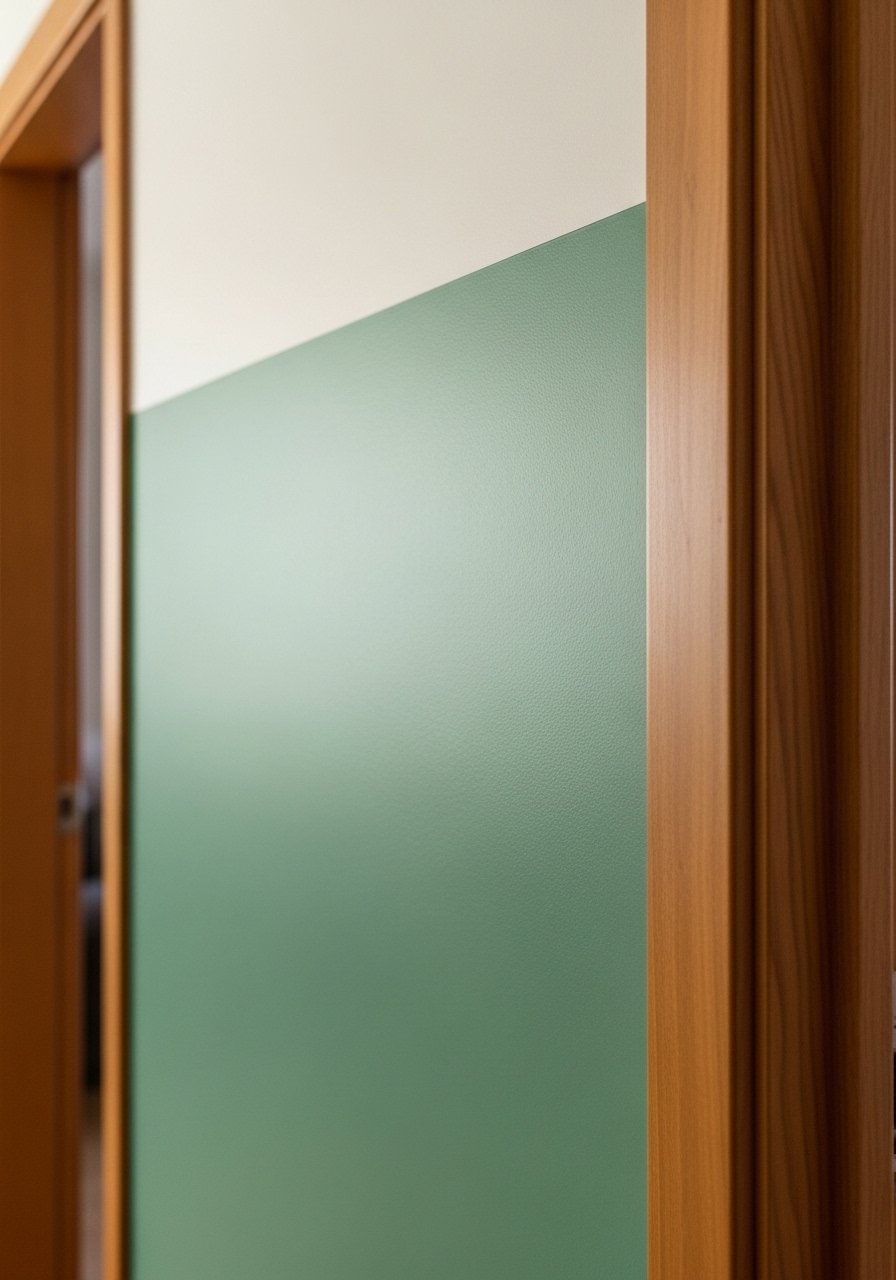
Painting one long wall in a soft matte color anchored the hallway and stopped the endless white sameness.
I painted too dark at first and felt boxed in. Lighter matte tones keep depth without shrinking the space.
Test large swatches on the wall at different times of day. Matte hides imperfections but can show scuffs — choose a durable matte finish.
A muted green or warm greige feels modern and lived-in without shouting.
What You’ll Need for This Look
10. Wallpaper on Half Wall (Wainscot Wallpaper)
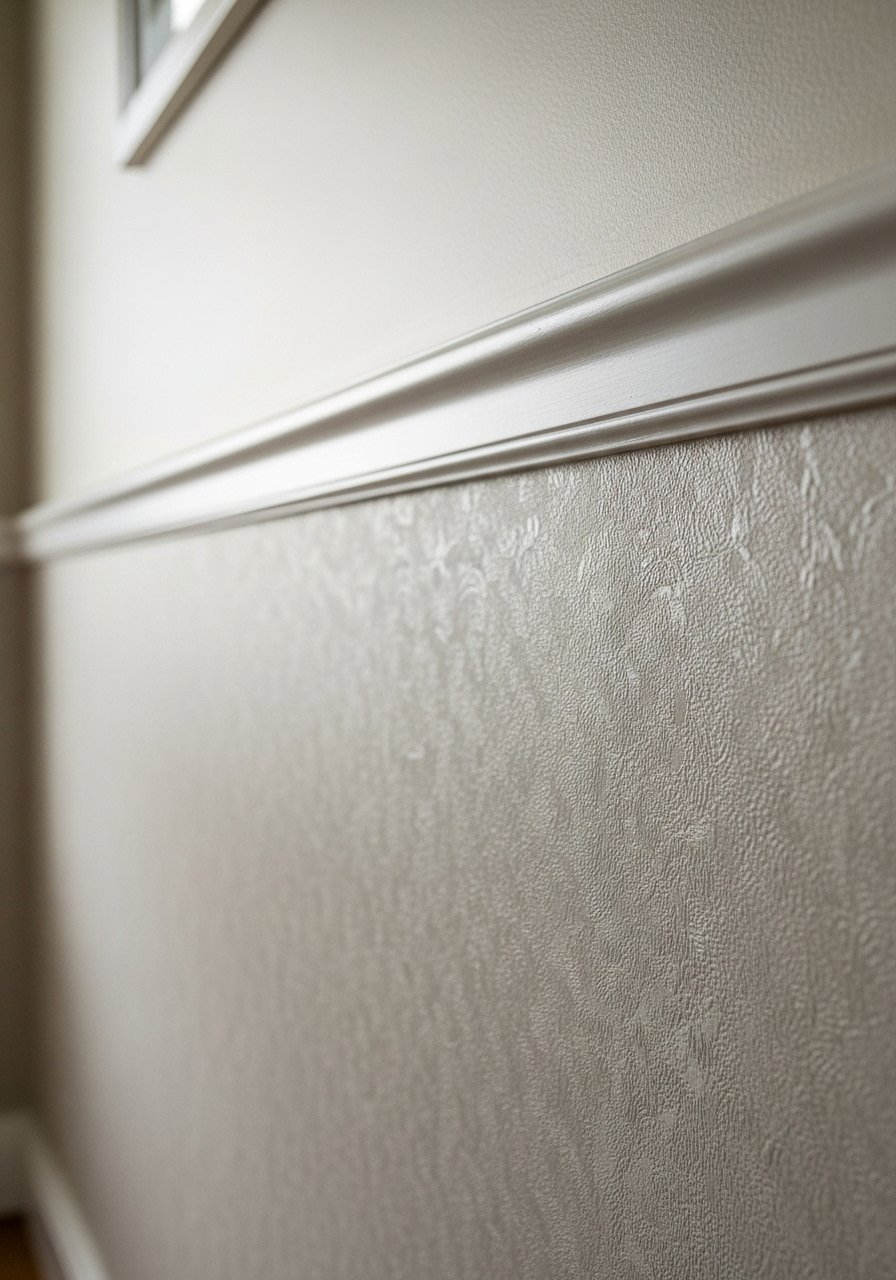
Papering the lower half added pattern without overwhelming the narrow space. It reads intentional and trims scuffs.
I tried a bold wallpaper full height and it made the hallway feel like a tunnel. Half-wall keeps visual weight low and cozy.
Use washable paper or vinyl for high-traffic areas. A simple chair rail finishes the look and masks edges.
If you rent, removable peel-and-stick papers are life-savers.
What You’ll Need for This Look
11. Sconces at Eye Level for Warm, Even Light
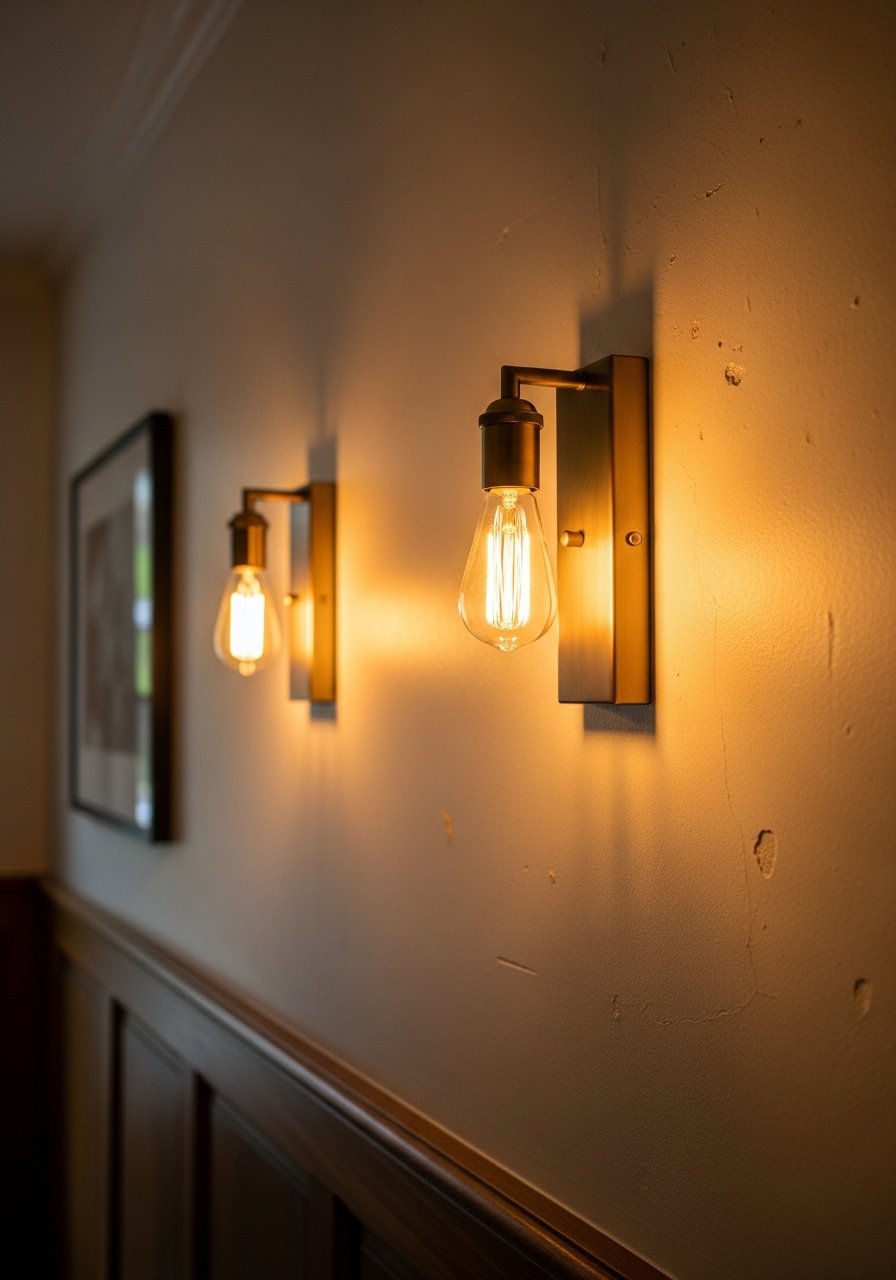
Replacing a single overhead light with wall sconces made the hallway feel warmer and less cavernous.
I once installed them too high; the light missed faces. Eye-level placement gives soft, flattering illumination.
Pick sconces that throw light both up and down for even spread. If wiring is tricky, plug-in sconces are a great workaround.
Soft bulbs and dimmers make the space usable at night without glare.
What You’ll Need for This Look
12. Layered Lighting: Overhead + Plug-in Wall Lamps
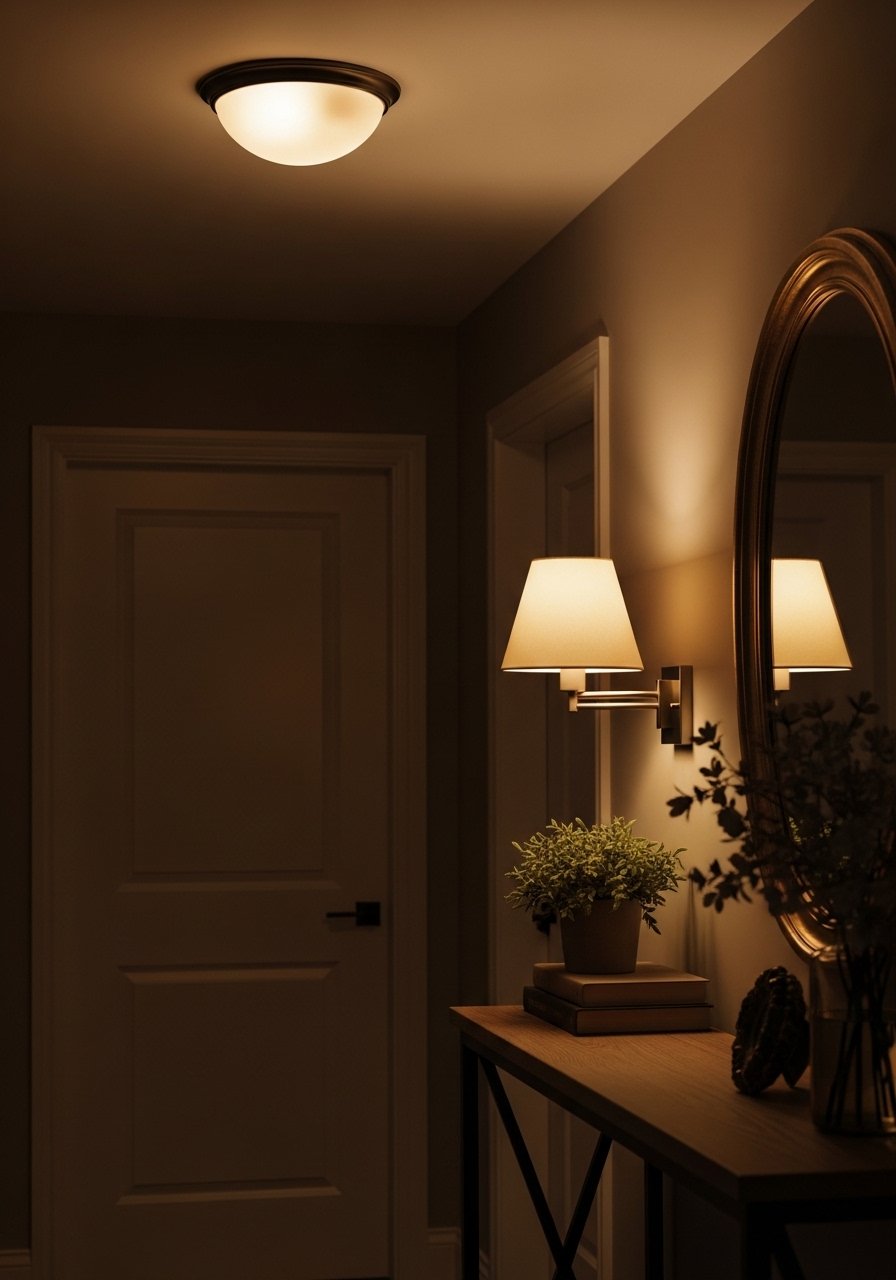
I learned layered lighting the hard way — one overhead made the hallway flat. Adding small plug-in wall lamps changed the mood instantly.
I first bought lights that didn’t match color temperature; the space felt off. Consistent warm LEDs made everything cozy.
Aim for three light sources: overhead for function, sconces for ambiance, and a table lamp for focus. Use timers for evening ease.
This setup feels both flexible and intentional.
What You’ll Need for This Look
13. Narrow Shoe Cabinet That Looks Like Furniture
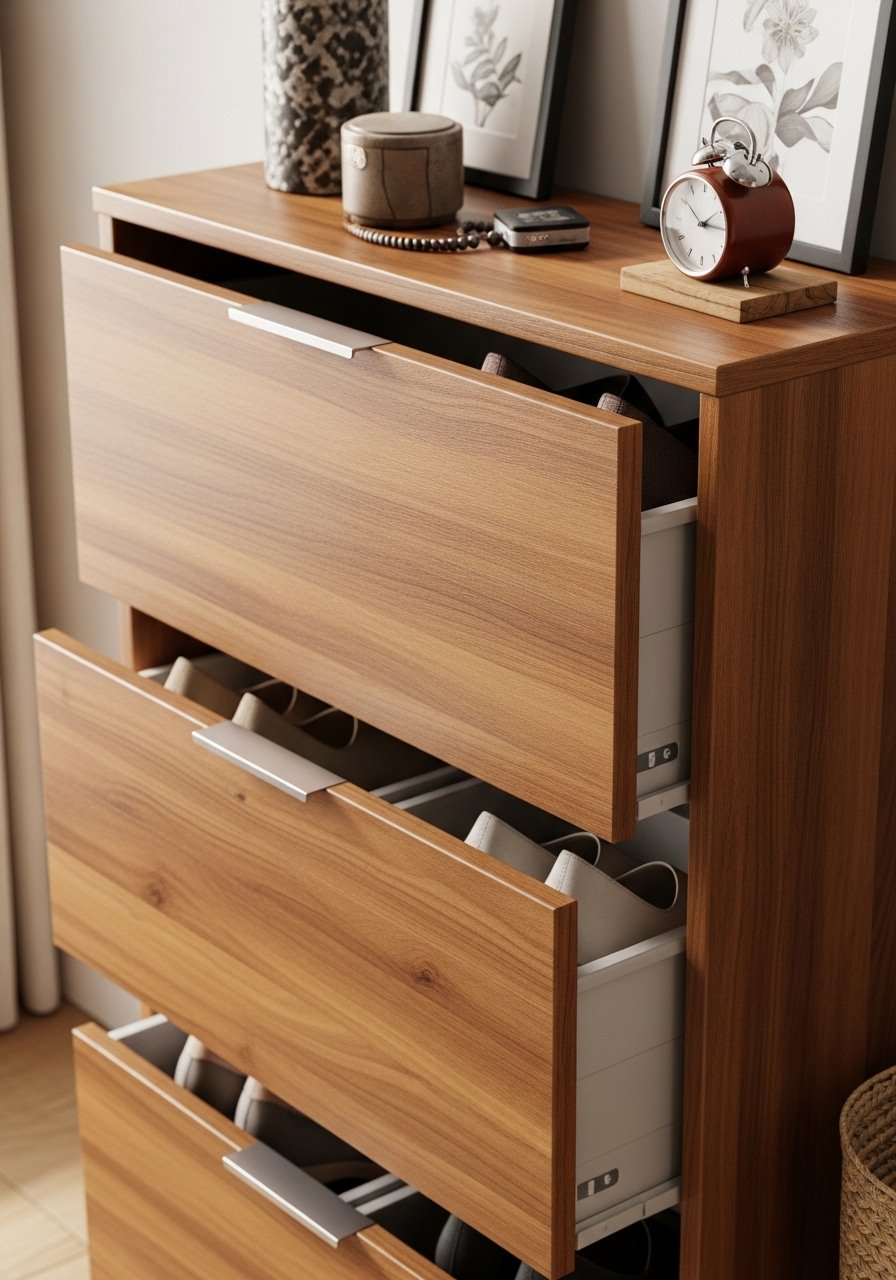
A narrow shoe cabinet replaced a dumping pile and looked like proper furniture, not storage. It keeps everything tucked away and keeps the floor clear.
My first cabinet was too shallow and shoes didn’t fit. I measured before replacing and that saved multiple returns.
Pick a piece with a flat top for a lamp and a tray. Closed storage always looks cleaner than open shelves in entry spaces.
Keep one top tray for daily items and the rest tucked away.
What You’ll Need for This Look
14. Greenery: Tall Slim Plants and Hanging Pots
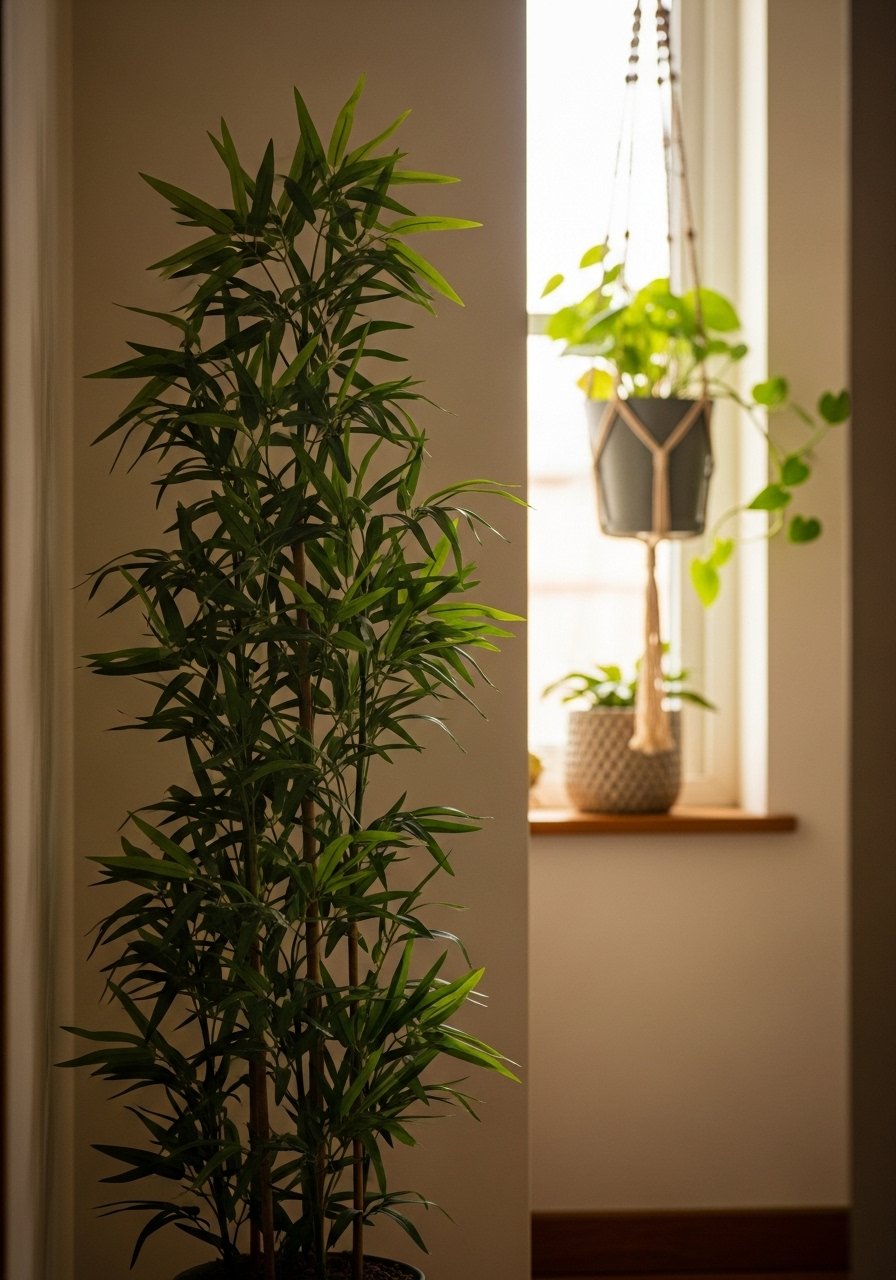
Plants made the hallway feel alive instead of decorative. A tall narrow fiddle leaf or a snake plant fits tight corners well.
I killed a few plants by overwatering at first. Choosing low-maintenance varieties was the real win.
Place taller plants near light sources and use hanging pots to add vertical interest without taking floor space. Rotate them occasionally for even growth.
Plants soften edges and add color without clutter.
What You’ll Need for This Look
15. Decorative Baskets for Umbrellas and Slippers
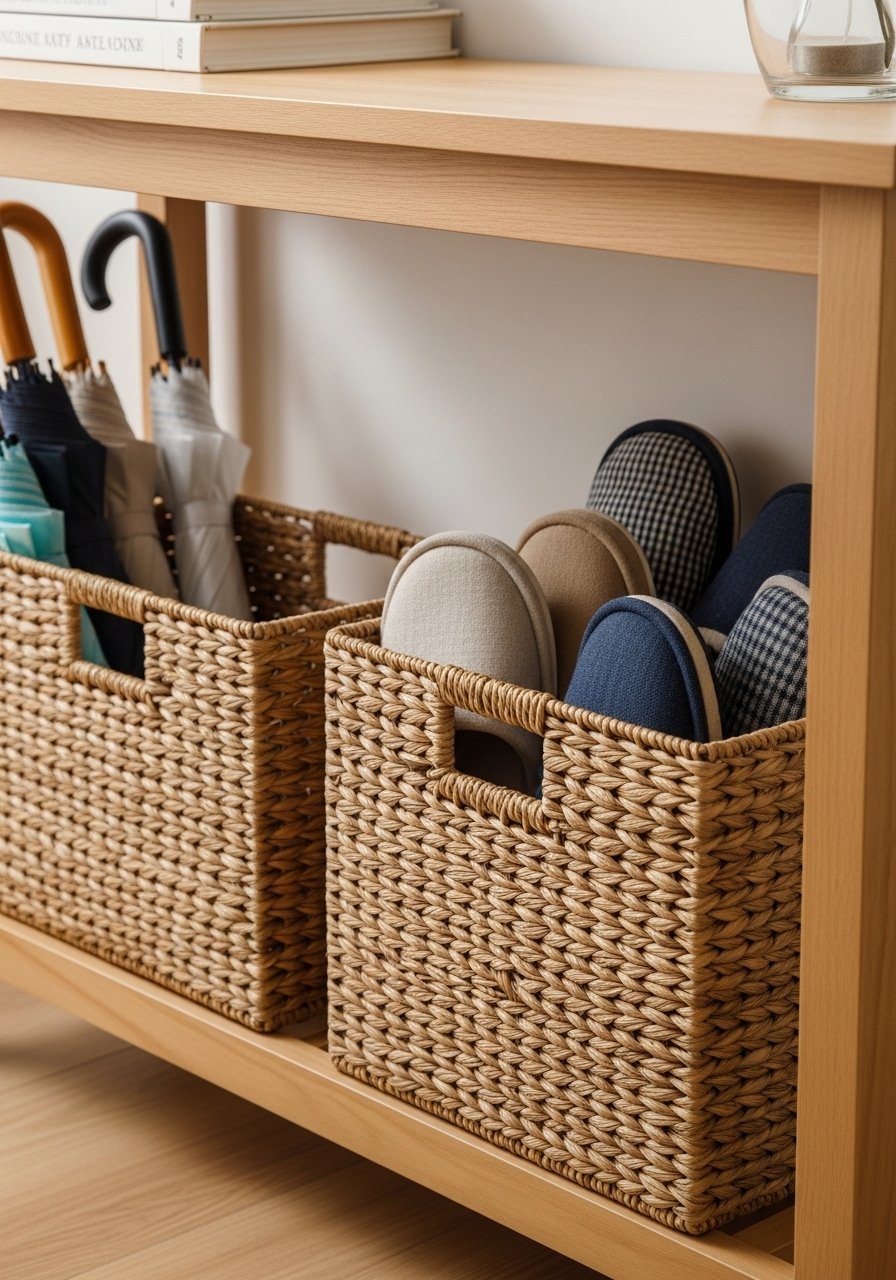
Woven baskets are the easiest way to cleanly stash umbrellas, scarves, and slippers. They feel intentional and hide the mess.
I tried baskets that were too small and everything spilled out. A couple of larger baskets is better than many tiny ones.
Place one basket near the door for umbrellas and another under the bench for slippers. Labeling is optional but helps in busy households.
Natural fibers add warmth and can sit right on a runner.
What You’ll Need for This Look
16. Chalkboard/Message Wall for Family Notes
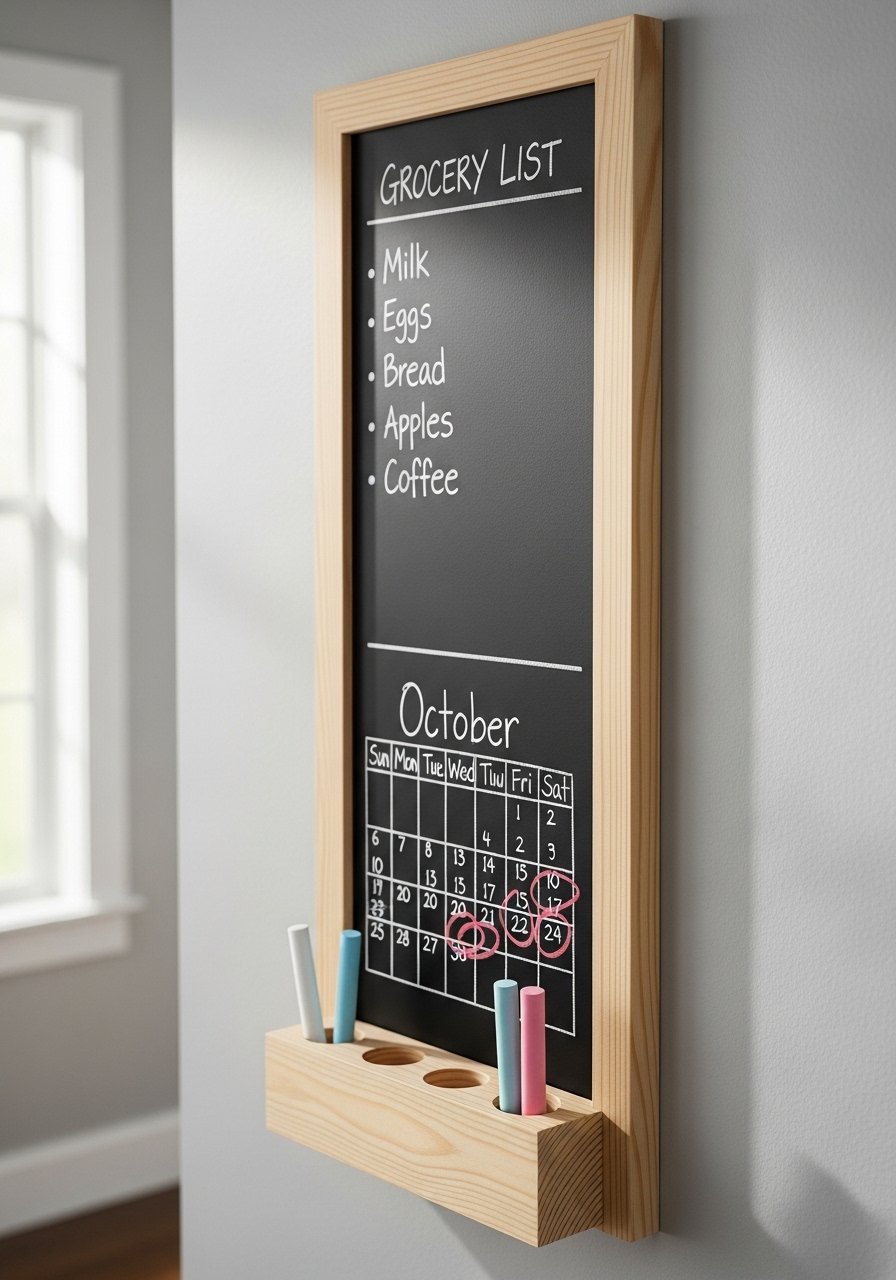
We added a slim chalkboard for quick lists and reminders. It became the unofficial family command center.
I tried a painted panel and the chalk dust annoyed me. A framed chalkboard wiped clean better and looked neater.
A narrow board fits between doors or under hooks. Use chalk pens for cleaner writing and less dust. Keep an eraser nearby.
It’s practical and adds personality without taking up floor space.
What You’ll Need for This Look
17. Small Round Table With Decorative Tray
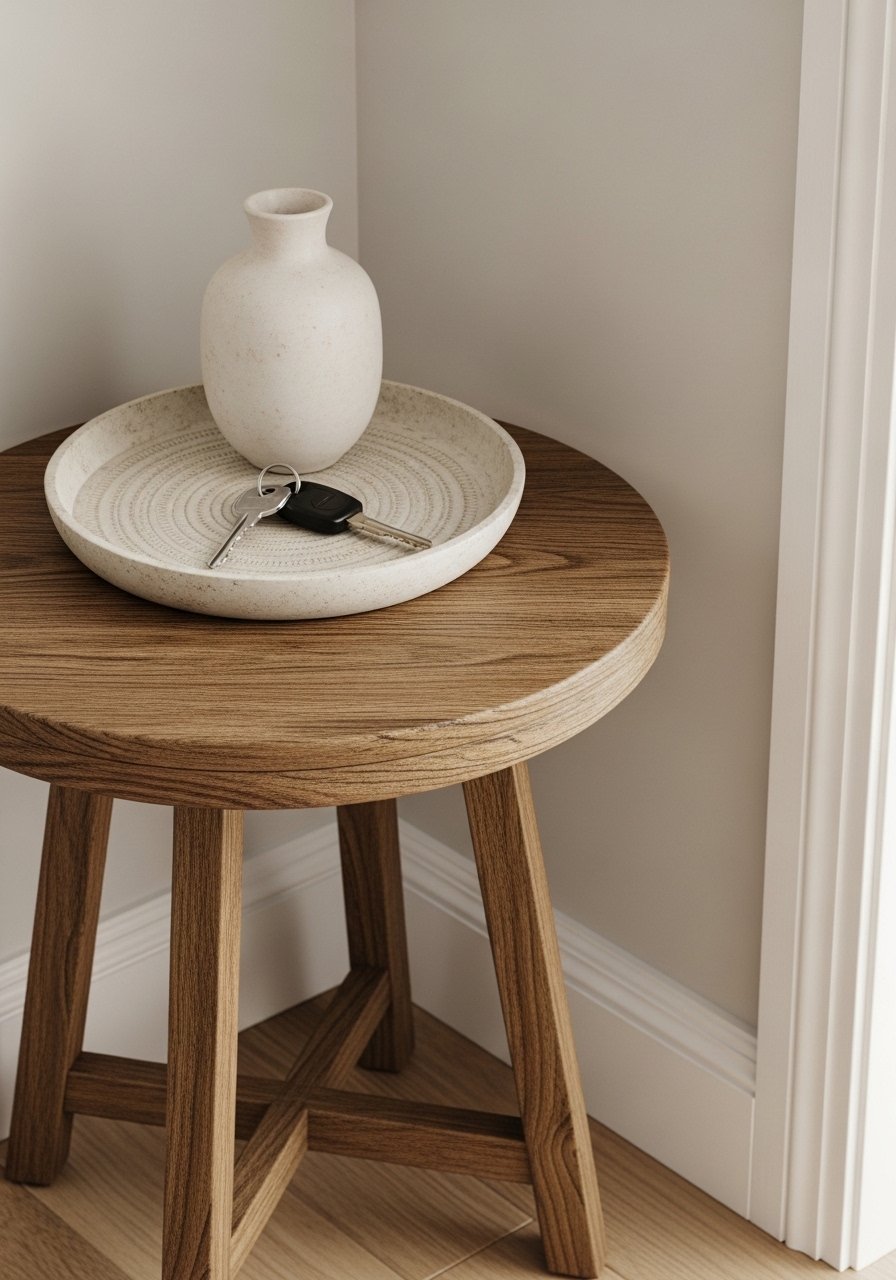
A petite round table near the door is both pretty and practical. It gives a place for keys without blocking the flow.
I once used a square table and it stuck into the walk path. The round edge feels friendlier and safer in tight spots.
Pick a small diameter (18–22") and top it with a tray to corral small items. A single vase or a short stack of books keeps it uncluttered.
This adds a homey pause in an otherwise functional corridor.
What You’ll Need for This Look
18. Architectural Molding or Simple Picture Rails
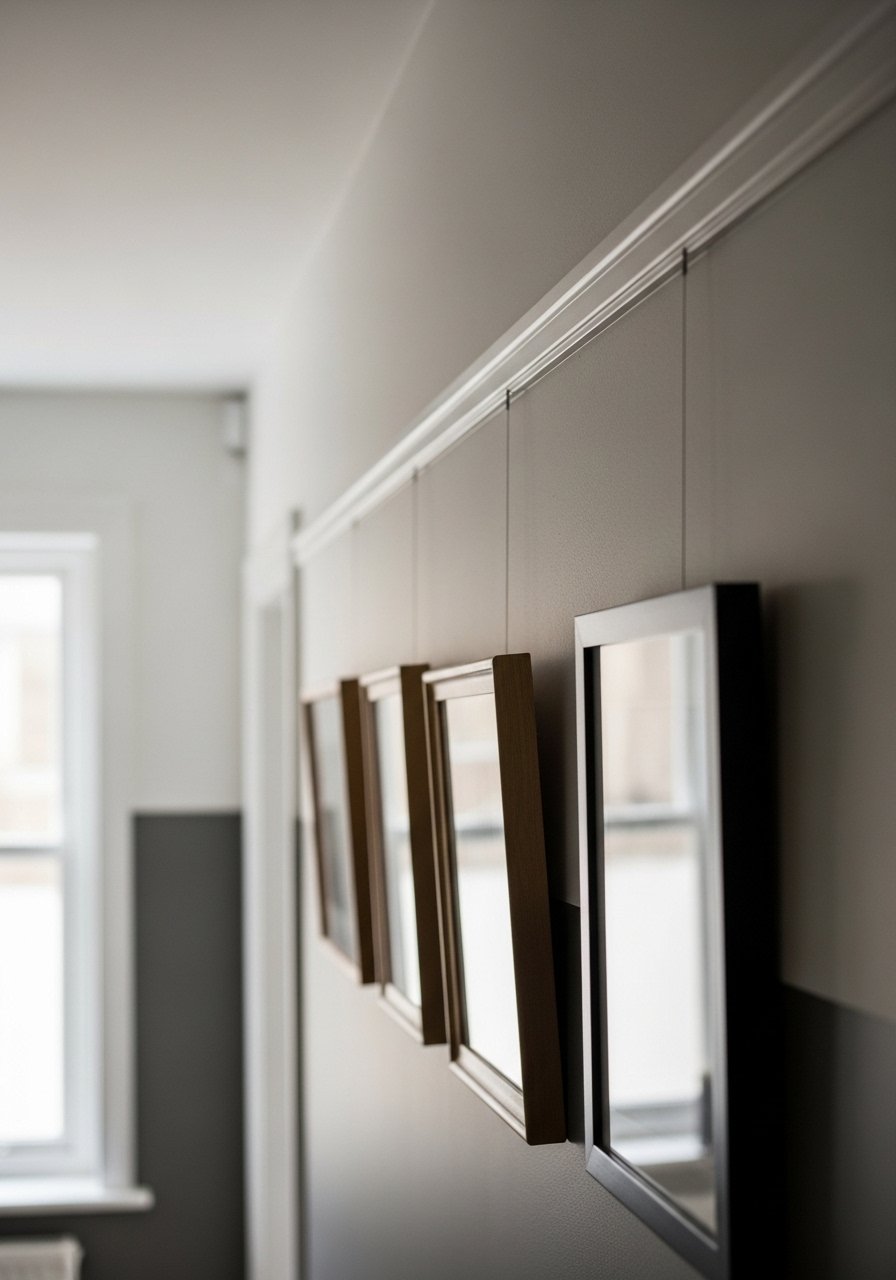
Adding a picture rail or modest molding brought proportion and detail to a plain hallway. It made the space feel considered without big work.
My first molding was too ornate and felt out of place. Simple, clean rails matched the rest of the house better.
Rails let you swap art easily and create a layered wall look. Paint them the same color as the trim for a classic appearance.
It’s an inexpensive way to add character without changing the footprint.
What You’ll Need for This Look
19. Smart Home Switch Plate and Hidden Cables
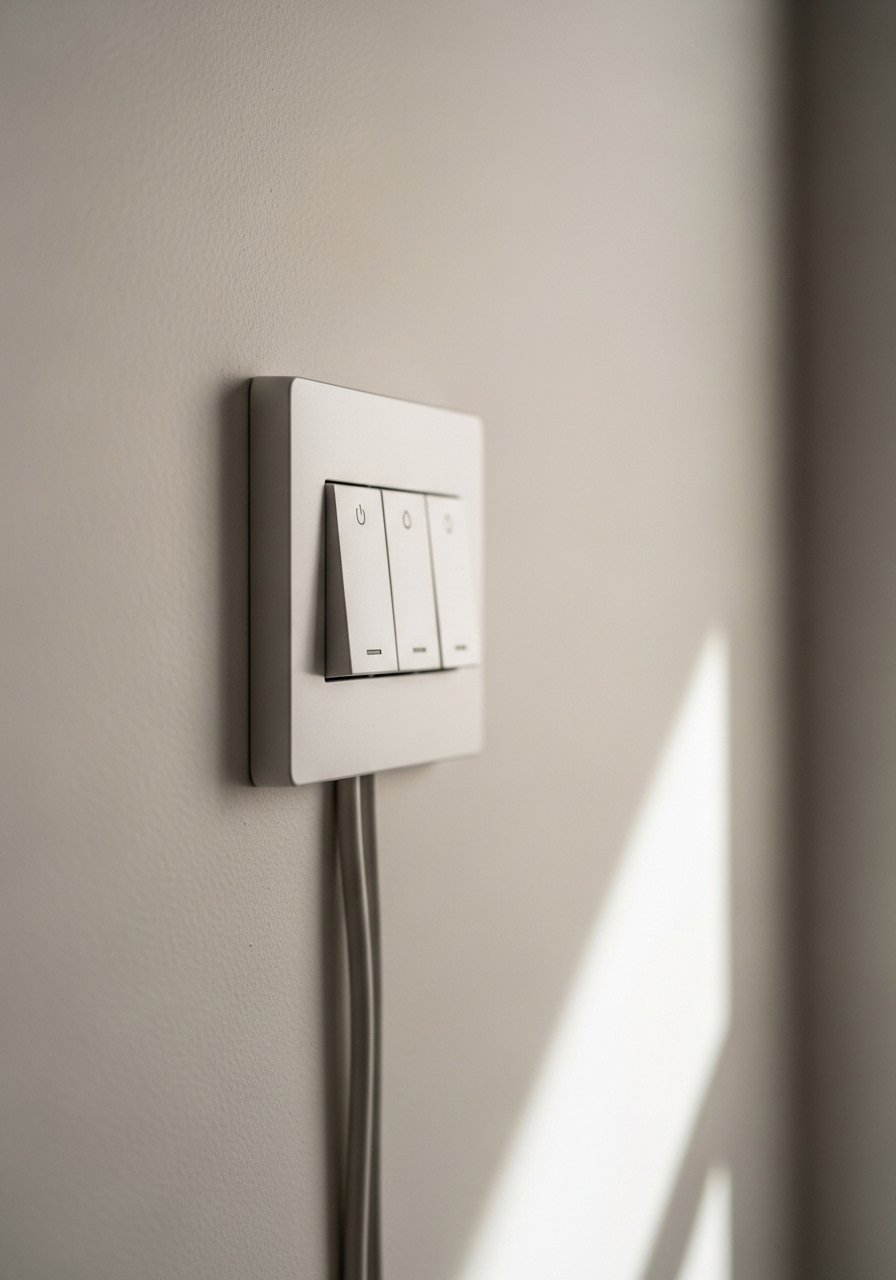
I swapped old switch plates for a slim smart plate and hid an ugly cable with a small cove. It made the hallway look cleaner and more modern.
I once left visible cables and it ruined the neat lines. Running them behind trim or using cable covers helped immensely.
Smart switches let you set hall lights on timers so you don’t fumble in the dark. Choose a plate color that disappears into the wall.
Small details like this keep the space feeling calm.
What You’ll Need for This Look
20. Entryway Drop Zone: Tray, Key Bowl, Catch-All
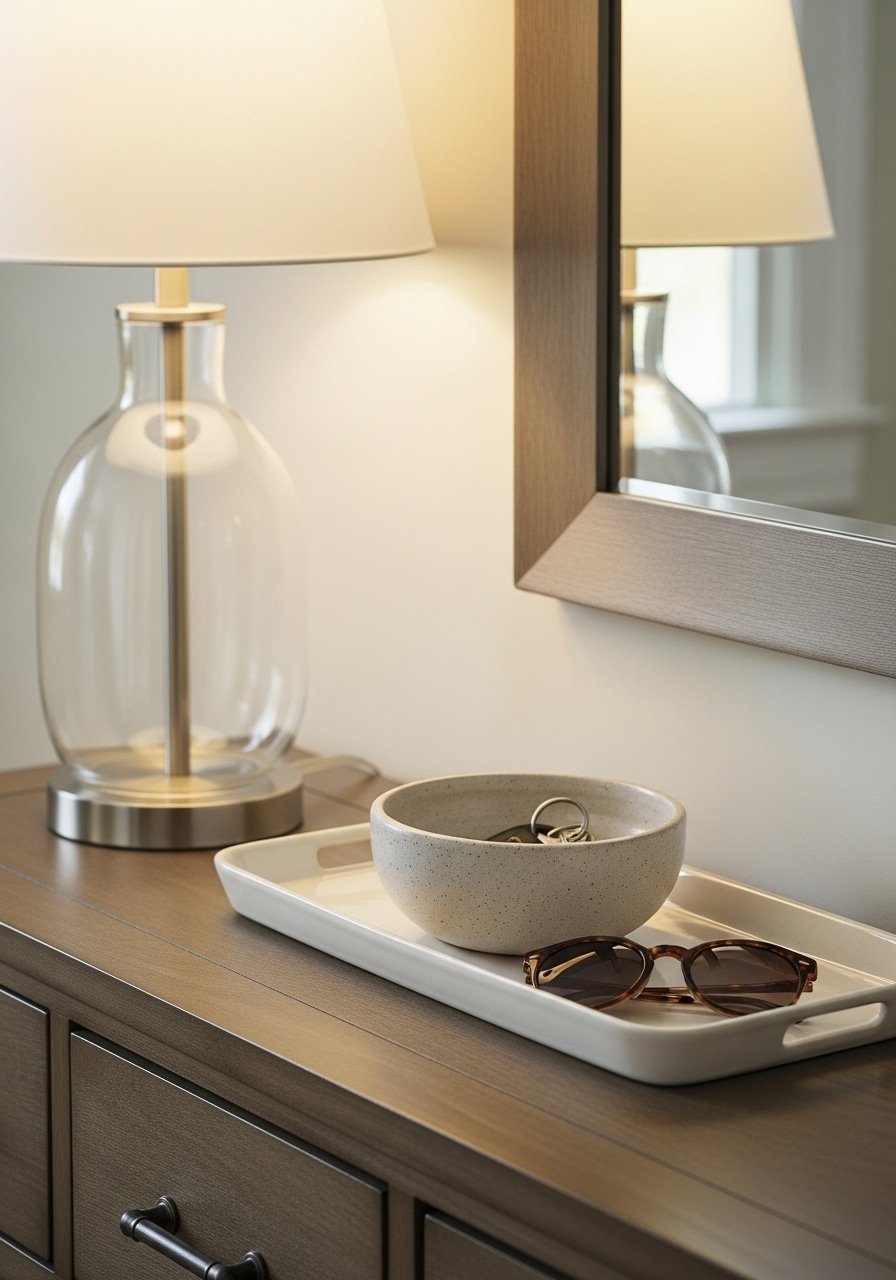
Designating a tiny drop zone prevented everything from accumulating on the bench. A tray and a key bowl keep things contained.
I used an empty tabletop before and it became a jumble. Once I intentionally corralled items, it stayed tidy.
Choose shallow trays so nothing crowds the walkway. Empty the tray weekly and your hallway stays approachable.
Function plus a small decorative object makes it feel thoughtful.
What You’ll Need for This Look
21. Minimalist Pegboard Wall for Seasonal Swaps
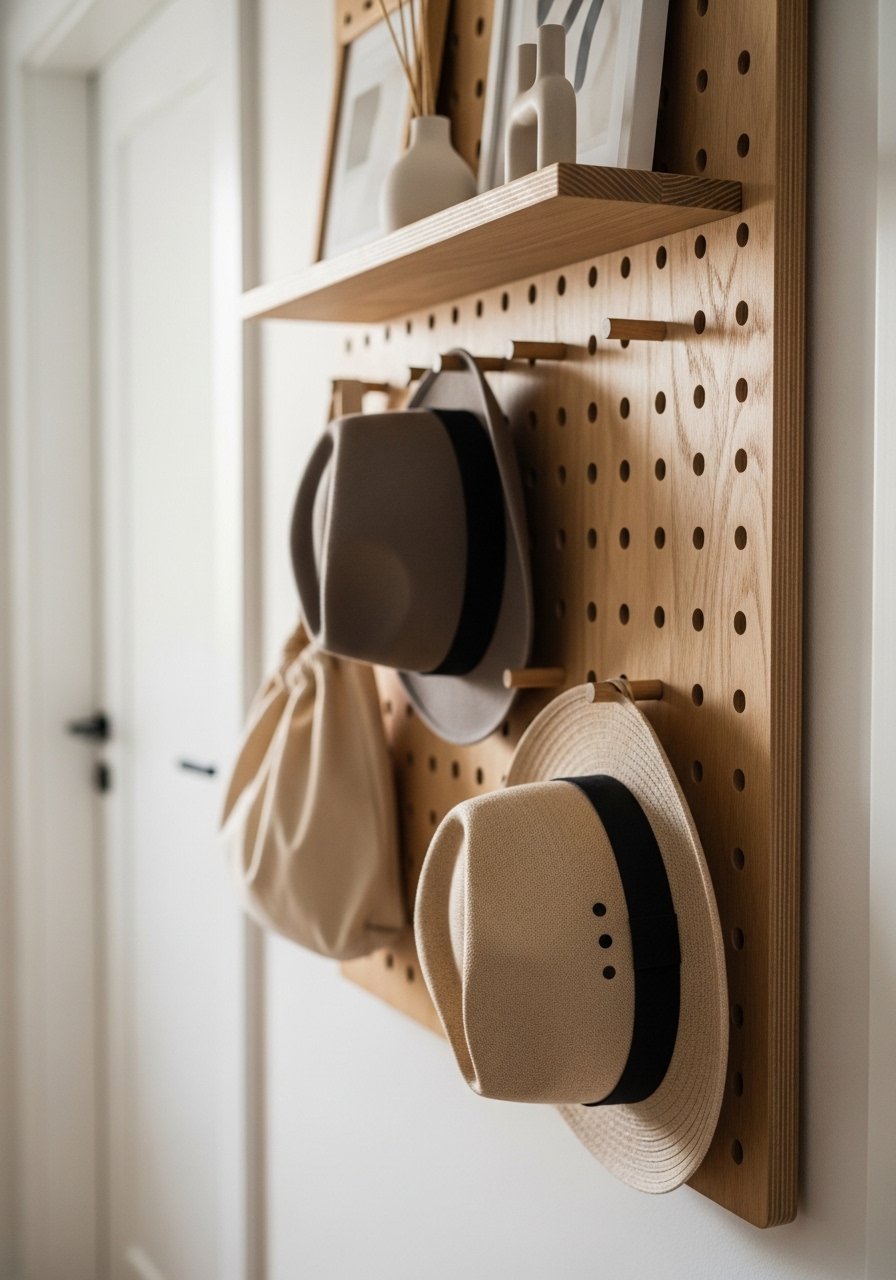
A slim pegboard gives flexibility for coats, hats, and seasonal swaps. It’s changeable without new holes each season.
I installed fixed shelves before and regretted it. Pegboards let you move hooks to suit changing needs.
Use a neutral pegboard to double as wall texture. Add a small shelf for mail and a hook for keys.
It’s a practical system that still reads clean.
What You’ll Need for This Look
22. Vintage Finds: A Small Antique Mirror or Table
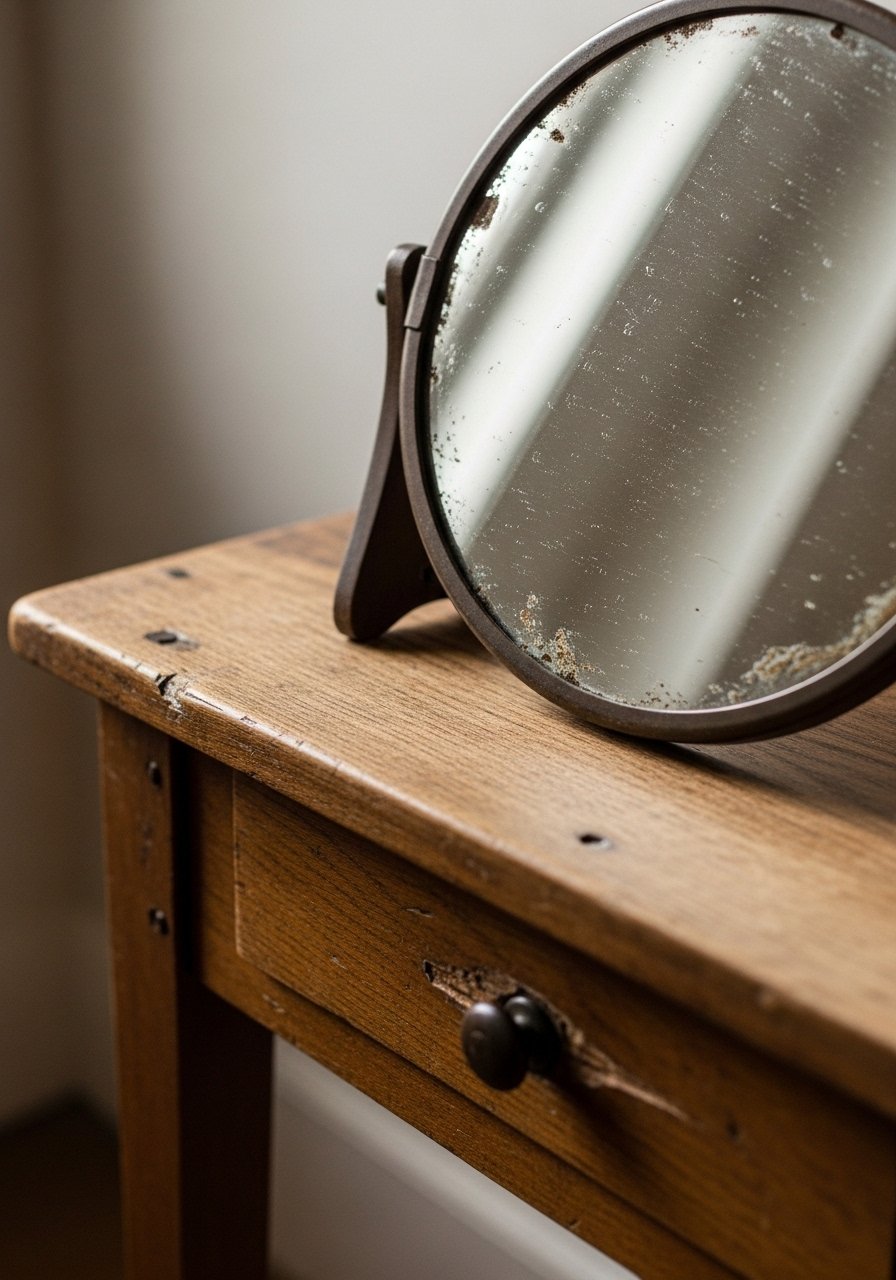
Adding one vintage piece — a small mirror or table — makes the hallway feel collected instead of staged.
I once bought a “vintage” piece that was actually damaged. Look for sturdy wear, not rot.
Shop local thrift shops or flea markets and bring measurements. A small antique mirror can give personality with minimal investment.
Pair vintage with modern textiles to keep the look fresh.
What You’ll Need for This Look
23. Textured Wall Panels or Peel-and-Stick Panels
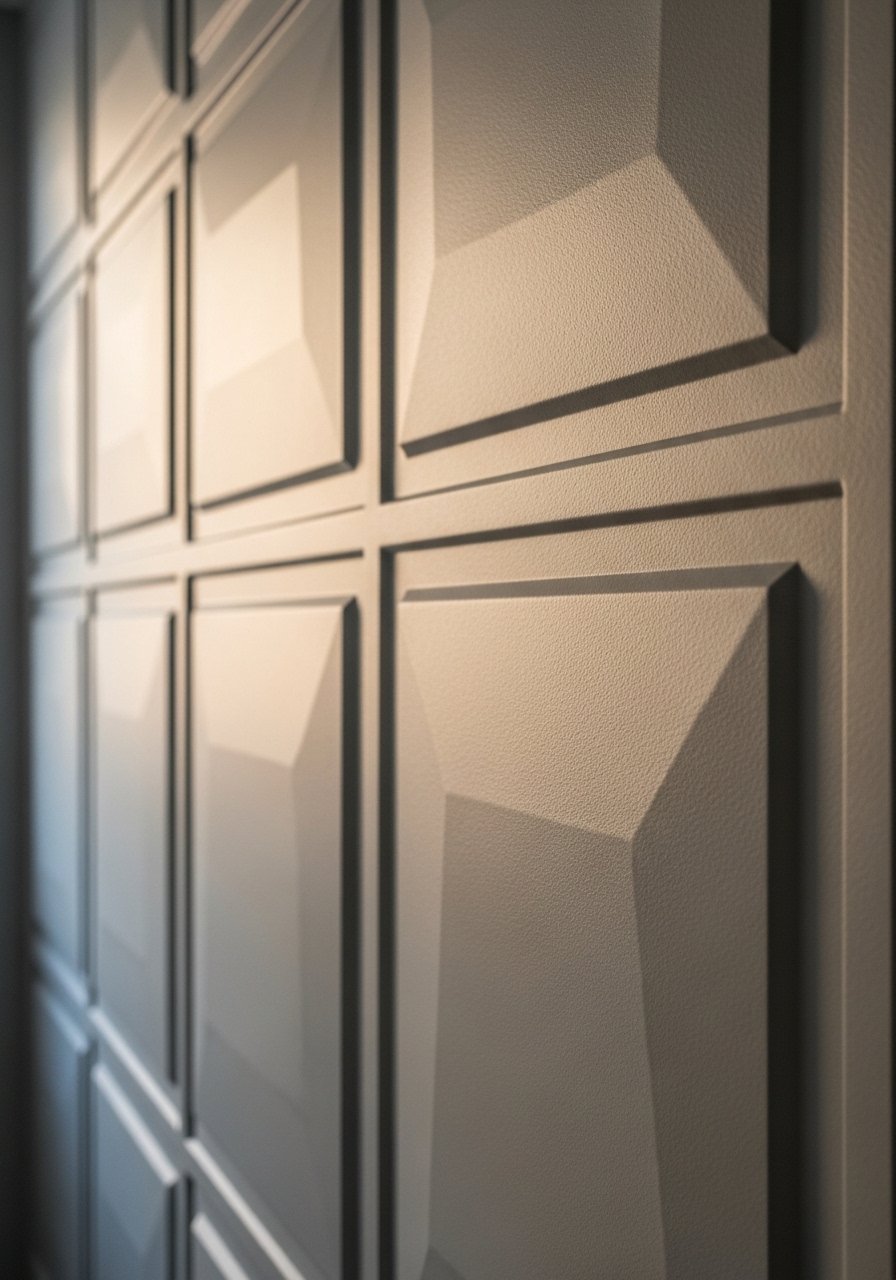
Textured panels add depth without color drama. We used them on one wall to disguise uneven drywall and it looked deliberate.
I tried heavy panels once and they felt too much. Thin, subtle textures give the right amount of interest.
Peel-and-stick panels are renter-friendly. Paint them the same color as the wall for a built-in look.
Texture reads sophisticated and holds up well to daily life.
What You’ll Need for This Look
24. Layered Mirrors: Small Cluster to Expand Space
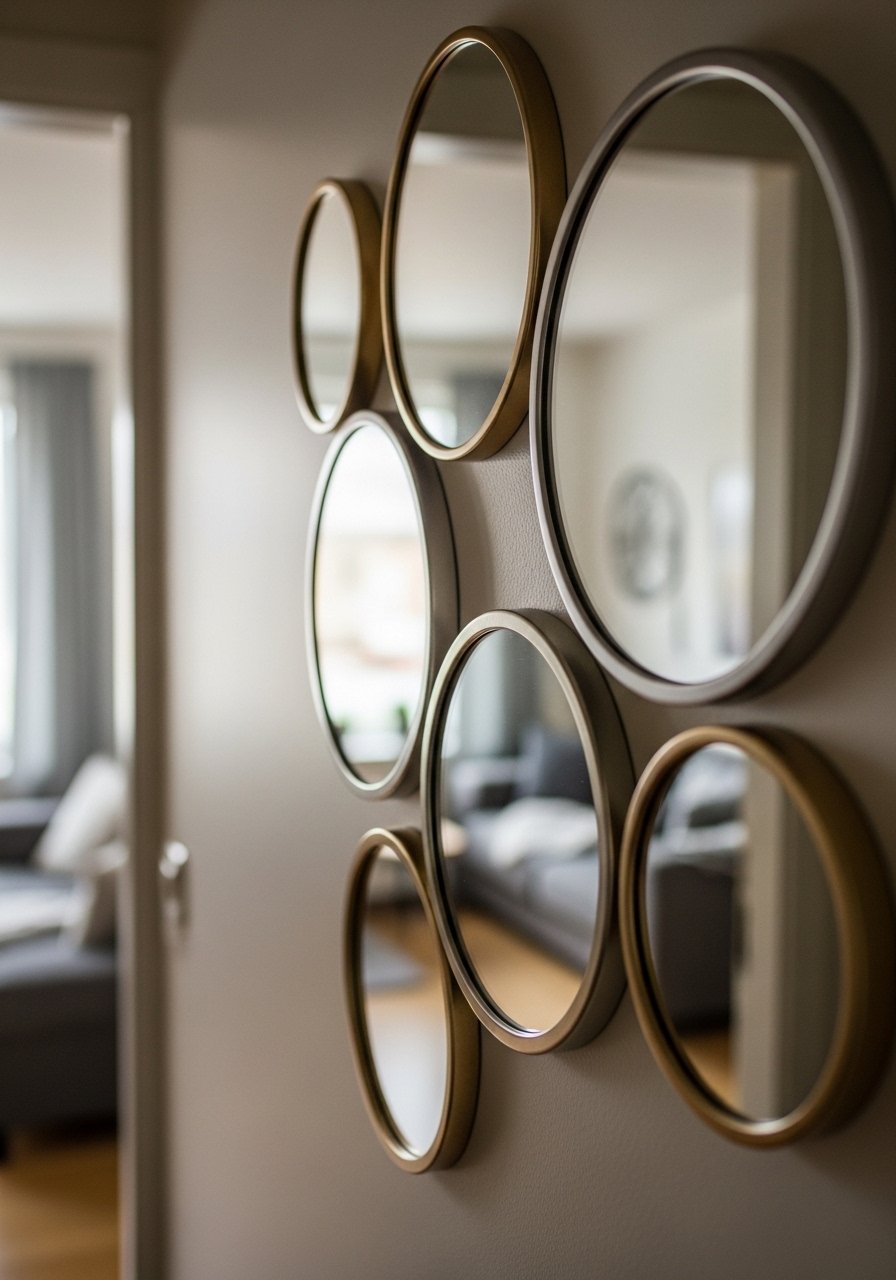
Instead of one big mirror, I grouped three small mirrors at different heights. It felt artful and made the space visually wider.
My first cluster had mismatched scales and looked random. Choosing similar sizes with varied frames unified the grouping.
Cluster mirrors around a focal point and keep spacing tight. This trick plays with depth without the commitment of a large piece.
It’s playful and practical in narrow spots.
What You’ll Need for This Look
25. Personal Gallery Shelf With Rotating Finds
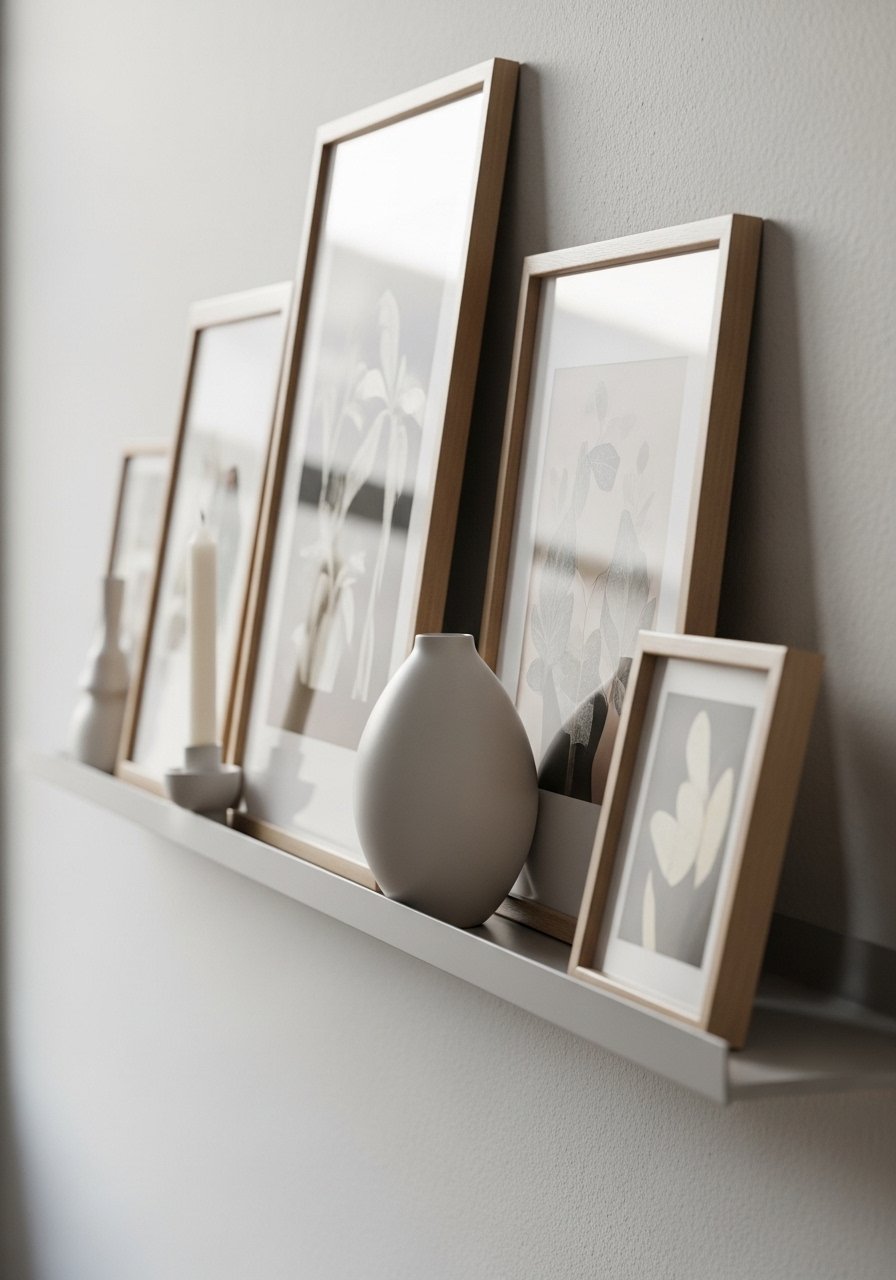
A slim picture ledge became my rotating gallery. I swap prints, postcards, and small finds seasonally and it keeps the hallway fresh.
I used nails before and regretted constant holes. A shelf needs no nails every time you change something.
Keep items low and shallow so they don’t protrude into the walk path. Small objects mixed with art make it feel personal and lived-in.
Rotate one item at a time — tiny changes go a long way.
What You’ll Need for This Look
Final Thoughts
You don’t need to do all 25 ideas. Pick one or two that match your hallway’s needs and budget.
Small changes — a light swap, a runner, a mirror — add up and make the space feel like part of your home. Keep what works, return what doesn’t, and enjoy the places you pass every day.
Leave a Reply