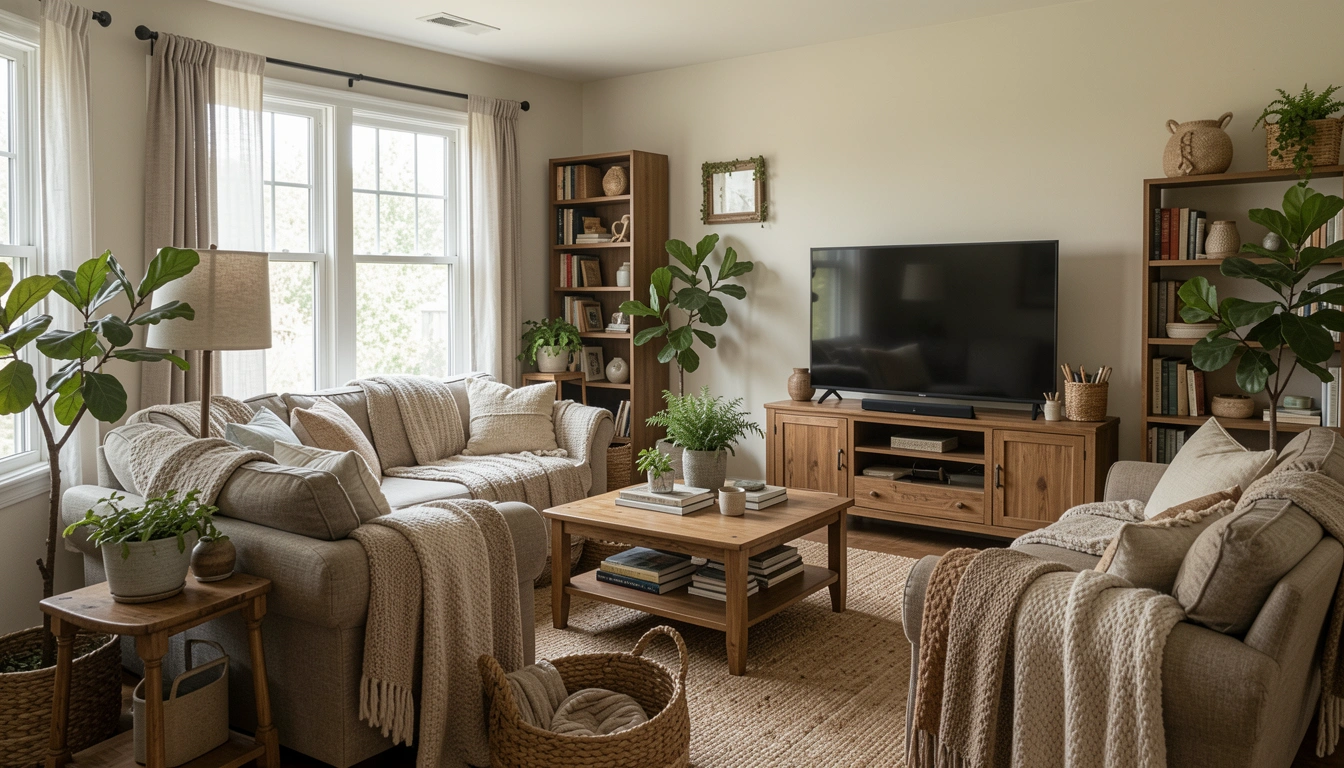
My family room TV sat there like a black hole. Everything else felt pulled toward it. Chairs faced it dead-on. Shelves stayed empty. The room worked for movies but felt off for hanging out.
I stared at that blank wall one afternoon. Kids' toys scattered. No warmth. Just screen glare.
I've fixed this in my own space. It starts with seeing the TV as part of the room, not the boss.
How To Decorate Family Room Decor Around The TV
This shows you how I make the area around the TV feel balanced and lived-in. You'll end up with a wall that draws the eye evenly. No more dead space. It's simple changes that settle right in.
What You’ll Need
- Set of 3 floating wood shelves, 24-inch length
- Gallery frame set, black metal 8×10 inches
- Faux fiddle leaf fig plant, 5 feet tall
- Woven seagrass baskets, set of 2 medium
- Neutral area rug, 8×10 feet beige
- Table floor lamp, brass base 60-inch
- Framed landscape art print, 16×20 inches
- Slim console table, 40-inch walnut
Step 1: Clear and Anchor the Base
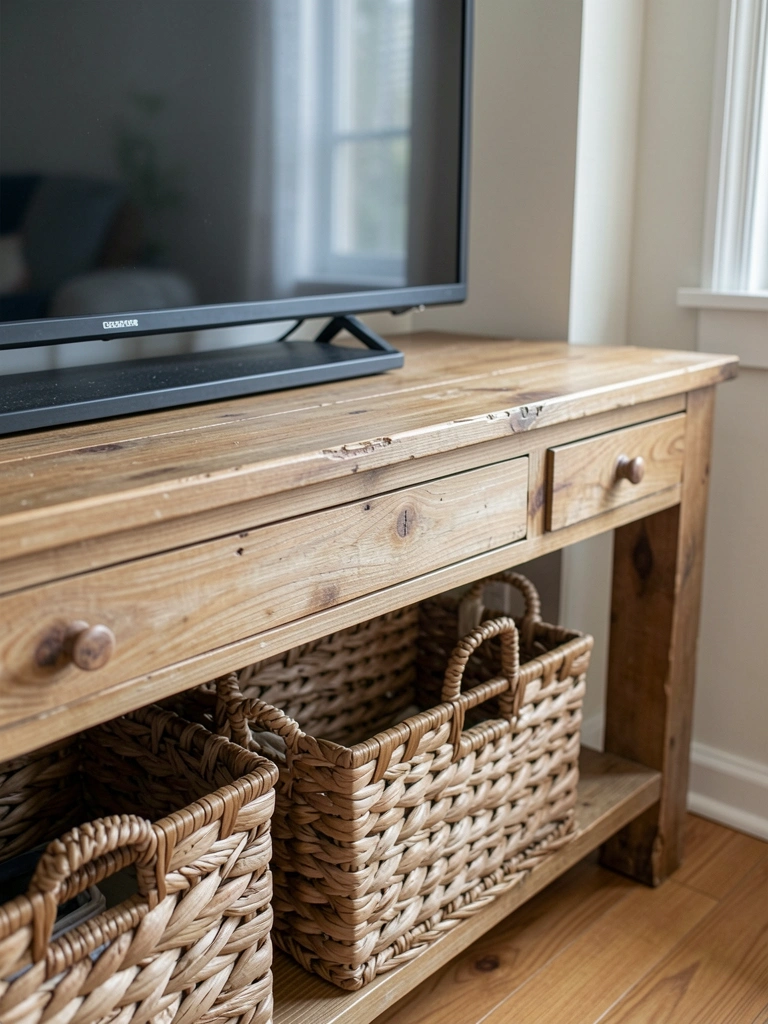
I start by wiping the wall clean. No clutter under the TV. Then I slide in a slim console table right below it. It grounds the whole setup.
Visually, the TV lifts off the wall. The table adds weight at the bottom. The room breathes easier now.
People miss how empty space pulls focus to the screen. Anchor low first. Avoid cramming toys on the table—it tips the balance.
This keeps it comfortable for family nights.
Step 2: Layer Shelves at Eye Level

Next, I hang floating shelves just above eye height. Not too high. Space them evenly around the TV sides.
The wall fills out. Textures pull the eye across, not just up to the screen. It feels wider.
Most skip measuring from the floor. Eye level means seated view. Don't overload shelves—one or two items per level avoids clutter.
Now the TV sits in a frame of calm.
Step 3: Add Personal Art and Photos
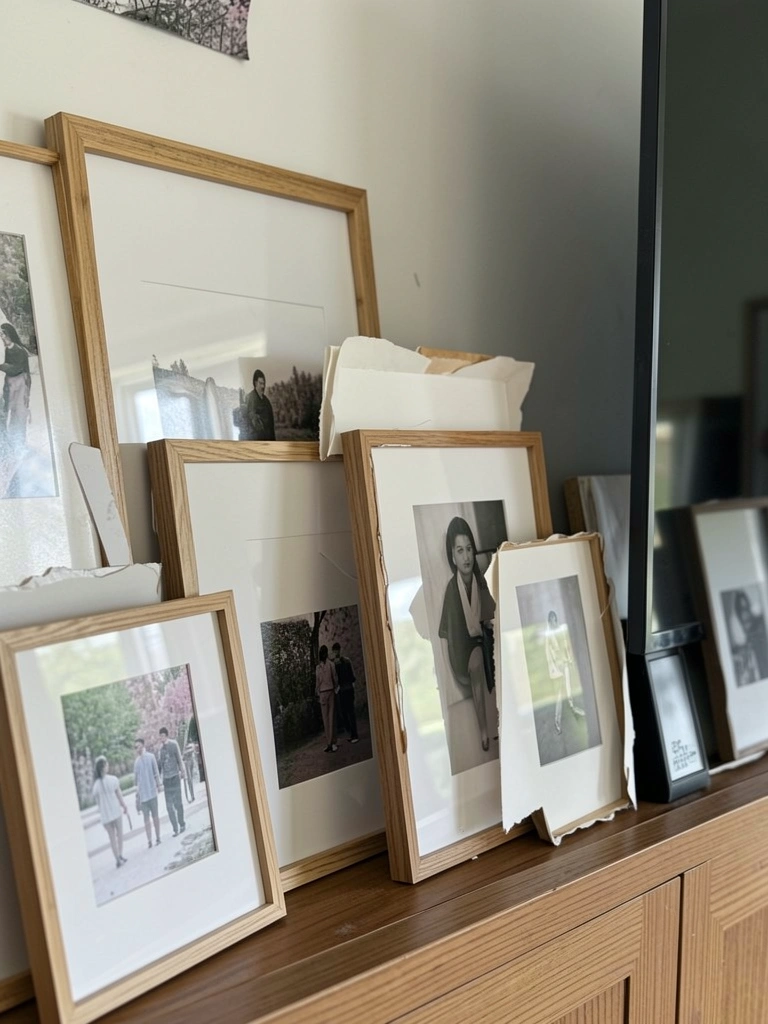
I pick a few frames—family photos, simple prints. Lean some, hang others. Mix heights on the shelves.
Colors warm the wall. The TV blends back. Stories pull you in beside the screen.
Folks overlook scale. Big frames dwarf the TV. Go smaller. Steer clear of matching everything perfectly—it kills the lived-in feel.
This makes the space ours.
Step 4: Soften with Plants and Baskets
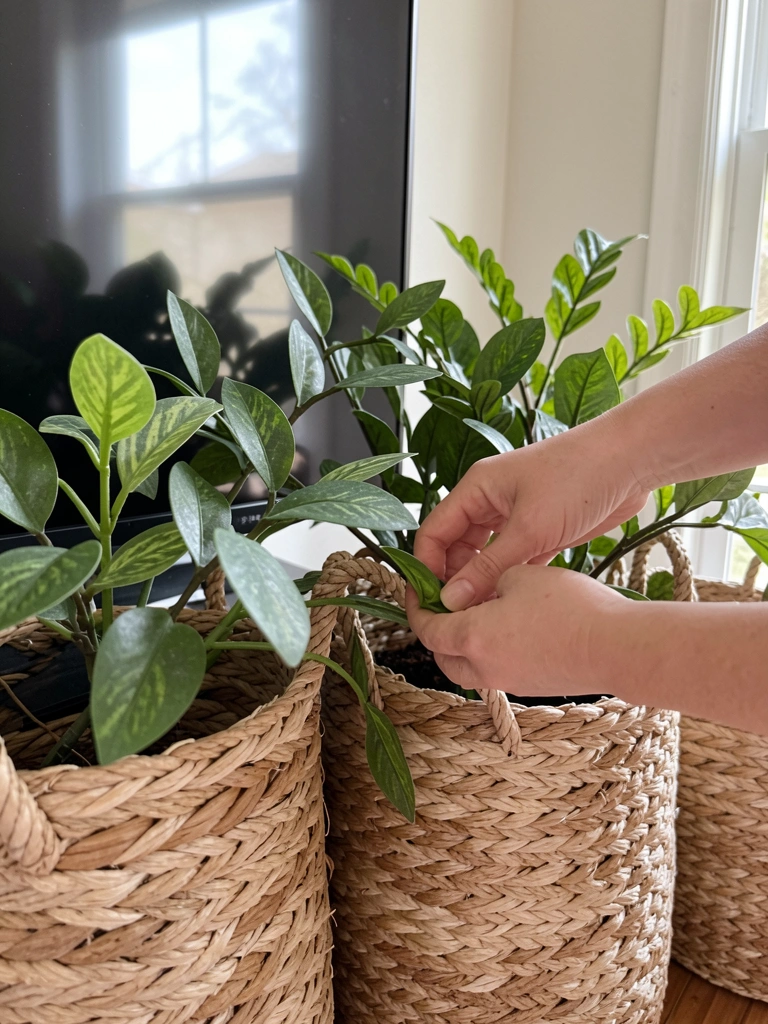
I tuck a tall plant to one side. Baskets below hold remotes or blankets. They hug the console.
Greens and weaves cut the hard lines. Light bounces softer. Balance tips to cozy.
The insight? Plants hide cords without hiding the TV. Don't let them block remotes—keep paths clear.
Family flows better here.
Step 5: Balance with Rug and Light

Lay a rug in front, angled. Place a floor lamp opposite the plant side.
The floor connects. Light warms evenings without glare. Everything settles.
People forget the floor pulls it together. No rug feels floaty. Avoid centering the lamp—it shadows the screen.
The room holds now.
Keeping It Family-Friendly
Kids run through here. Toys end up everywhere. I chose wipeable frames and stable shelves.
- Baskets hide mess fast.
- Low table edge stops bumps.
- Rug cushions falls.
It stays put through playtime. No constant fixes.
Handling TV Cords Cleanly
Cords bugged me first. I bundle them behind the console. Baskets swallow extras.
Tuck plants to mask wall runs. No visible tangle.
Simple ties from the shelf set work. Room stays clean without effort.
Refreshing for Seasons
Twice a year, I swap art. Summer prints for beach shots. Winter for cozy scenes.
Plants stay. Baskets get throws.
Keeps it fresh. No big overhaul.
Final Thoughts
Start with the console. See how it shifts the feel. Build from there.
You've got this. The TV fits now.
Your family room waits warmer evenings.
Leave a Reply